Omega Speedmaster

First Watch on the Moon

49 years ago today, Apollo 11 was whizzing through space and, in three days time, the landing module, Eagle, touched down on the Sea of Tranquility.
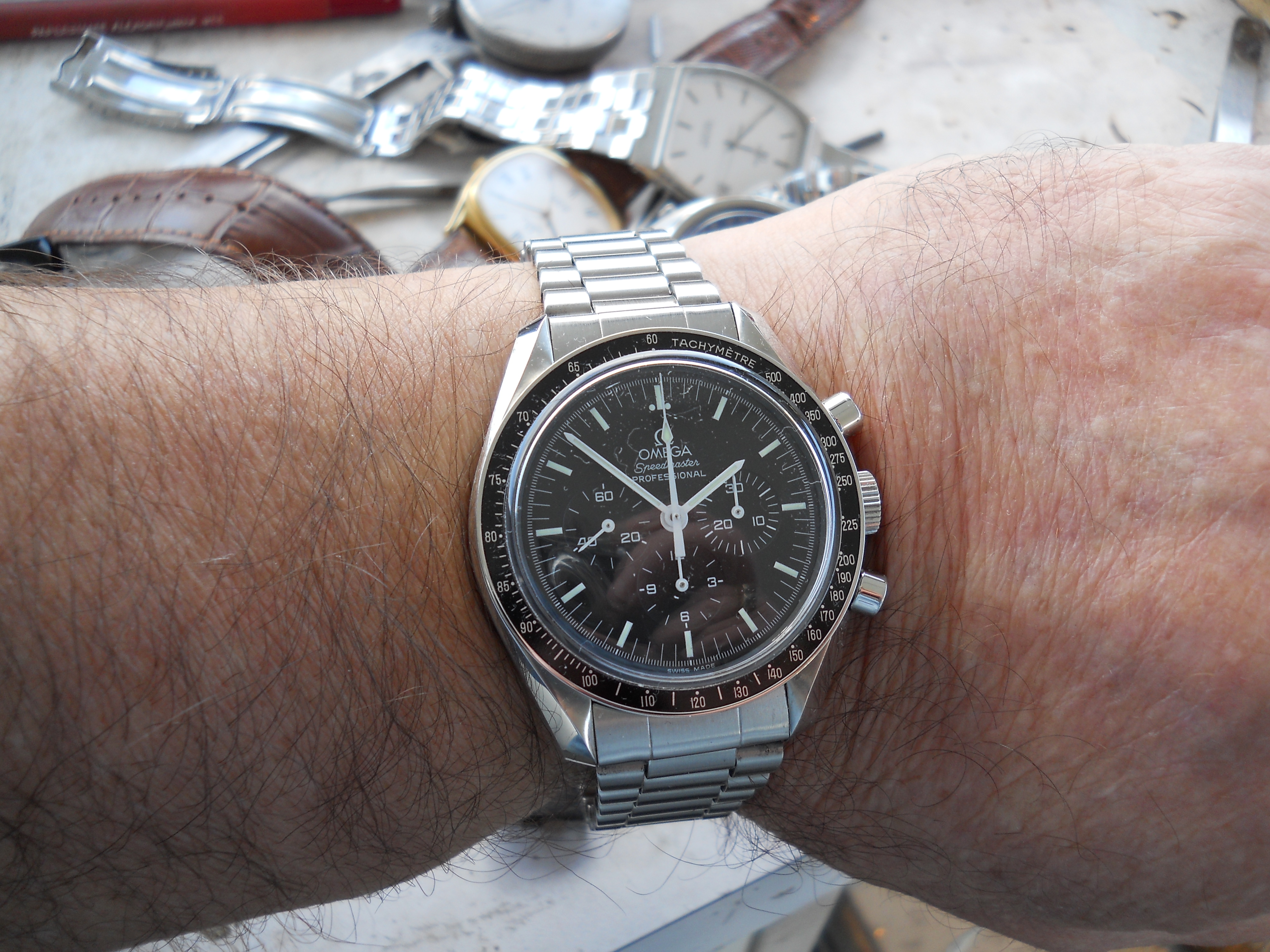
As Neil Armstrong took the small step for a man, on his wrist was this Omega Speedmaster, known ever since by its nickname “The Moon Watch”

The first Speedmaster, Chronograph, was released by Omega as a sports timer in 1957 to compliment Omega’s appointment as the official timer for the Olympic Games.

In 1965 Omega upgraded the Speedmaster with a new movement. This was about the time that NASA was testing watches to be used in their space programme.

Of the six chronographs that NASA tested, the Speedmaster was the only one to withstand all of the severe tests under conditions of zero gravity and magnetic fields, extreme shocks, vibrations and temperatures ranging from -18 to +93 degrees Celsius.

So as the astronauts’ official watch this lead to the most memorable moment in the Speedmaster’s history; 21 July 1969 at 02:56 GMT, when it became the first watch worn on the Moon’s surface.

In another historical event, the Speedmaster was worn on the wrists of both the American astronaut Tom Stafford and the Russian cosmonaut Alexei Leonov during the historic Apollo-Soyuz space rendezvous. This was the first time the cosmonauts also wore the Omega Speedmaster. Ever since, the Speedmaster has been the official chronograph of all Russian manned space missions.

The Speedmaster, along with the space pen (zero gravity pen) are the only two items of the Apollo 11 astronauts’ equipment that is available to the general public.

So this is what I have in common with Neil Armstrong. Actually, I was one up on Neil when he was still with us (RIP). I’ve got one, Neil lost his years before!

I love this watch!


Posted in Chronograph, Omega | Tagged , , , , , , | Leave a comment

Omega Seamaster De Ville, 1966

A 60’s Masterpiece

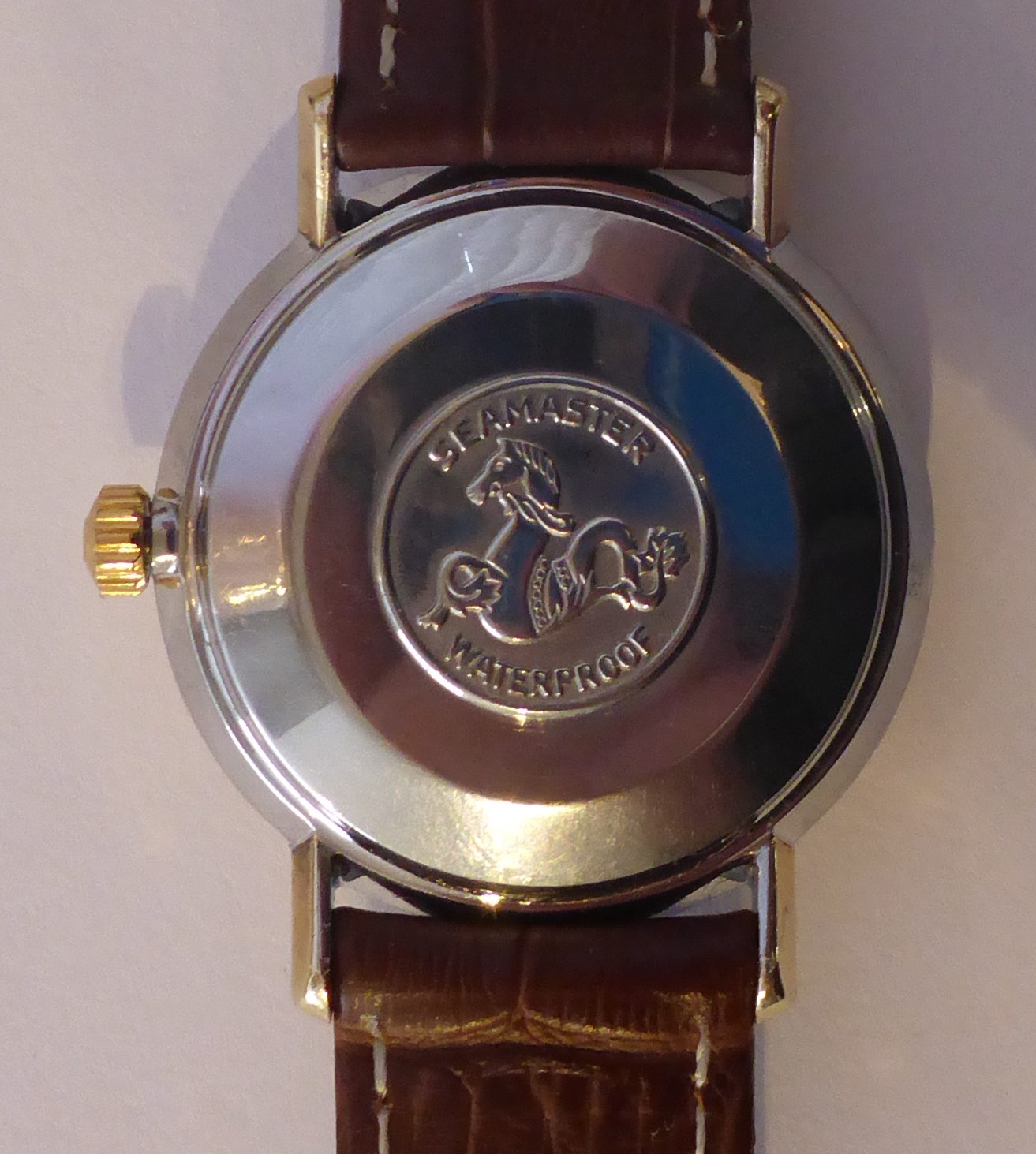
This is almost as good as it gets, a near perfect example of a 1966 Omega Seamaster De Ville, the gentlemen’s dress watch of the period.

During the eminent years of watchmaking, the 60’s, the flagship of the Omega range was the Constellation. But, in its shadow, was the much better value and more popular Seamaster.

But there wasn’t a lot of difference between them, technically or aesthetically. I have, on several occasions mistaken one for the other when viewed from the distance of the wearers’ wrist.

Just like the Constelation, the Seamaster was water resistant, tough, reliable, accurate, durable and, in most cases, beautiful.

The signature “seahorse” medallion

I think the difference is slight. The Constellation is a certified chronometer, which means it complies (and is tested) to a standard of performance and construction. But the movement that was used in all models, the 500 and 700 series were, as far as I know, close to identical. So, performance should be consistent between the two even though the Seamaster was not tested to chronometer standards. But the quality of the entire Omega range was at such a high standard that just about all movements would have passed the chronometer tests.

Back to this watch. I was fortunate to have it kindly gifted to me by a lady who wanted to pass on a prized personal possession of her late husband to where she knew it would be appreciated and looked after. Her wish is and will be respected.

A restoration was required to get it to this near perfect state; an overhaul of the movement, a new crown, glass and hands were fitted, general refurbishment of the case and a quality strap was attached.

The result is a beautiful addition to my collection


Posted in Omega, Seamaster | Tagged , , , , , , | Leave a comment

Titoni Airmaster 1969

Style with Practicality

The little known Titoni brand was launched in 1952, a Swiss brand aimed at the Asian market. In 1969 they released a line called the Airmaster, (Anything suggesting flying was a buzzword in the year of the moon landing).

This is a minor restoration job, it came to me rather grotty and scratched, but all it really needed was a good clean and polish.

The reasons I like this watch is that it is a good quality commercial watch, signed four times including a beautiful medallion on the back featuring the meihua flower, native to South West China – as its insignia. Its movement is the superb (soon to be superseded) ETA 2452 automatic self-winder  with a date.

The dial is a pleasant iridescent gray with raised, well-polished markers. It has a very fine chapter ring with tiny luminous dots at 5 minute intervals. The hands are a little aged making the contrast between dial and hands poor.

Next year the family company that produces the brand will celebrate its 100th birthday. Before, and overlapping  Titoni, they marketed a rather successful mark, the Felca. Although they never made in house movements, they are legitimate watchmakers with a solid tradition, always based in Grenchen, Switzerland, has been controlled by four generations of the same family and is one of the few independent watchmakers left.


Posted in Titoni | Tagged , , , , , , , | Leave a comment

Railway Pocket Watch

This watch is a monster!

When I showed it to a colleague, she broke out into a chant “I’m late! I’m late for a very important date.”  Of course, this evoked images of the rabbit in Alice in Wonderland sporting a ridiculously large watch similar  to the one I was holding.

This watch reminds me of this!

It is an interesting and unique timepiece and it came to me reputed to have been a Scottish stationmaster’s watch. Nothing else is known, it is completely unsigned. It is big, 67mm in diameter and 21mm thick.  I  found a picture of one on the Science Museum Group website and it was said to have come from The London Midland & Scottish Railway (LMS) which existed from 1923 to 1947.

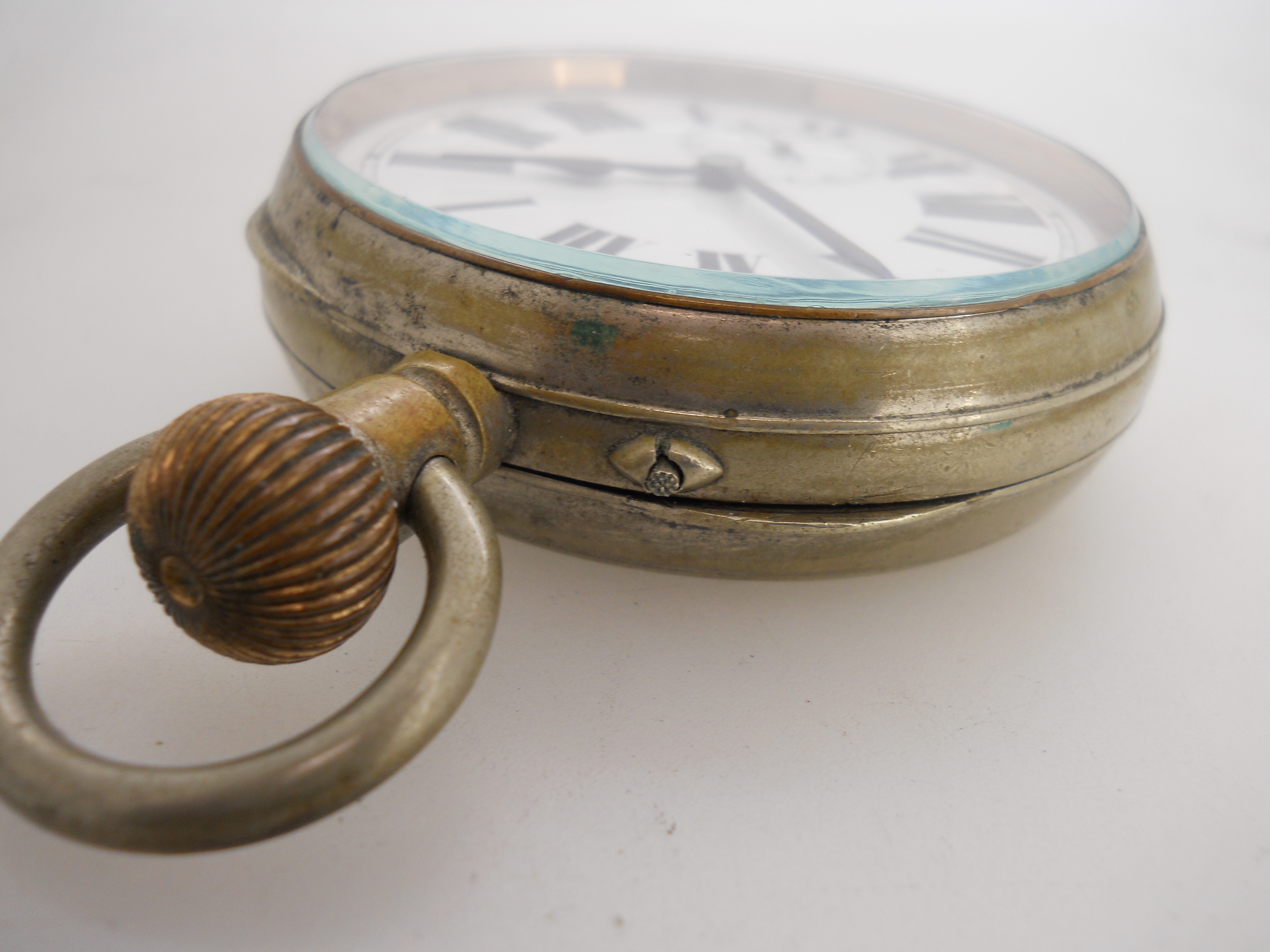
The tiny pin set which is depressed with a finger nail to change the time

The movement is standard, mid quality early 20th century with a bi metallic balance, timing screws and 15 jewels. Rather than the time being set by pulling the crown out, this watch is set by the pin set system in which the time is set by depressing a tiny button, just left of the crown and then turning the crown while the button is depressed. This button sits in a slot so only a fingernail can press it down. This system was used extensively from the mid to late 1800’s until sometime after the start of the 20th century.

The dial is in mint condition, rare for enamel dials because they often show hair line cracks with age and suffer from chips with shocks. The roman numerals are very heavy and the dial is surrounded by a fine chapter ring. There is a beautifully proportioned sub second dial and the hands a heavy spade style made of blued steel.

There’s no doubt about the purpose of this watch with maximum black/white contrast and large bold markings, it’s designed to be read easily at a glance under even the dimmest conditions, in an intense industrial environment.

The case looks rough, tough and ordinary. It’s made of gunmetal, has a flat bevelled glass. The back is hinged as is the inner dust cover and in addition a further cover made of glass, this I have not seen before in a pocket watch.

Despite this watch’s very rugged case and all-round big, tough appearance, it is very fragile. I have not tested this and I don’t intend to, but I doubt if it would stand a drop of 30cm onto a firm surface. The balance staff and the glass would break and the enamel dial would either chip or crack.

I do like this watch for several reasons, most of all because it is unique and mysterious but also because it is a railway watch and great advances in horology where made during and because of the development of railways. I’ll be writing an article about that soon.


Posted in Pocket Watch | Tagged , , , , , | Leave a comment

Seiko Presage Limited edition

After selling watches for 40 years, I rarely get excited enough about a new style to want one for myself. But it happened this week. When I feasted my eyes on this Seiko Presage, it was love at first sight.

The name presage is after a cocktail developed by a renowned mixologist (is that a real word?), and the proprietor of a bar in Shibuya district, Tokyo.  It is a limited edition timepiece; this one is No. 0901 of 3500.

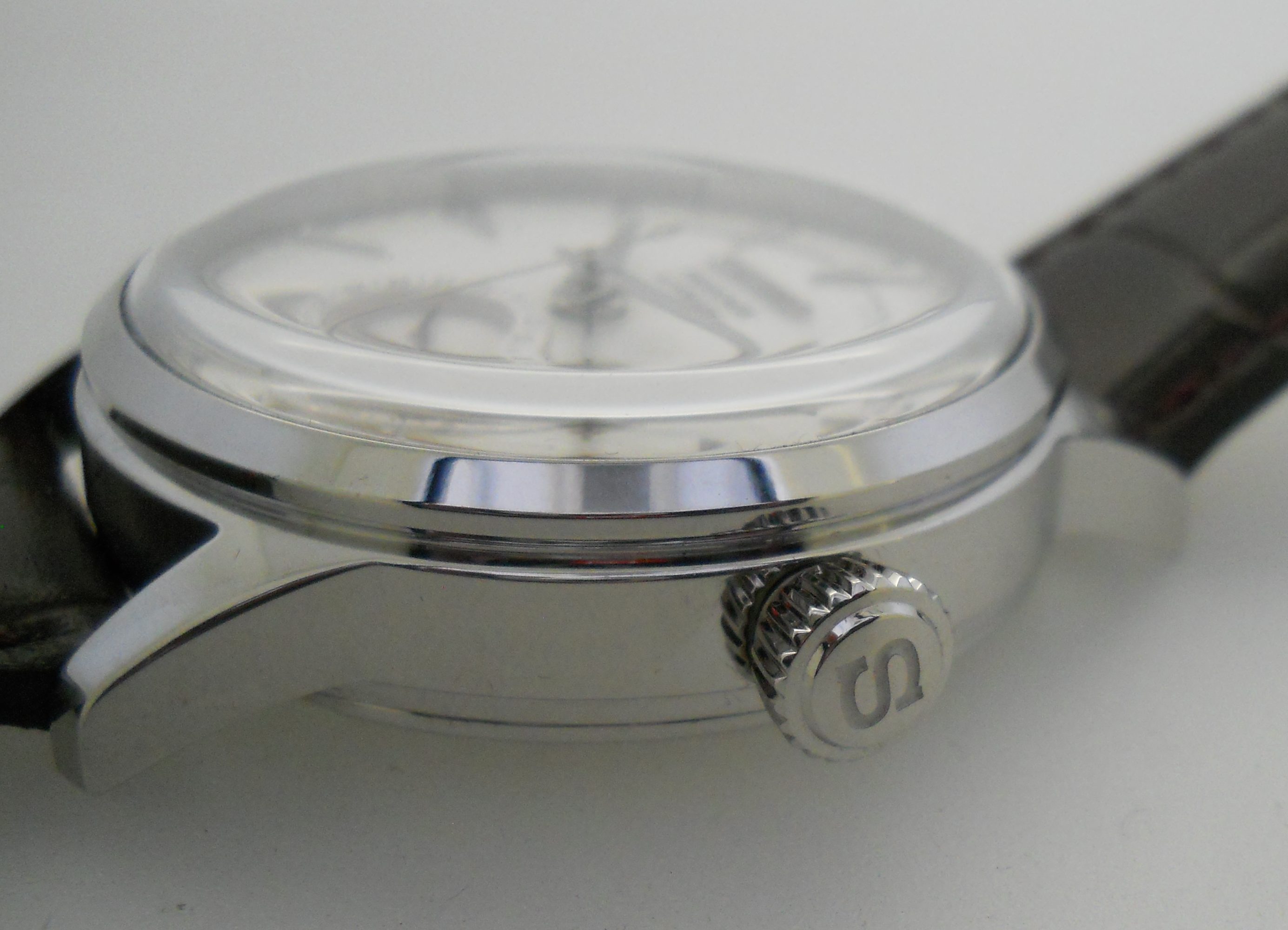
The dial is extremely eye-catching; subtly textured, three layer with a sunken date sub dial and raised index markers. The quality of the hands and markers is excellent mirror finish, in keeping with Seiko’s habit of over delivering on quality with the visual features. The delphin hands are bevelled, which gives this watch excellent legibility despite the rather poor contrast. The very large crown and the domed glass, not only gives this watch a retro look, but also a lot of character.

I love signatures and, for me, the more the better. This watch is signed 5 times; the dial, the movement, the back, the clasp and (at last! Seiko rarely signs this) the crown.

Talking of the clasp, here we have a deployant type clasp (not deployment) and I love it…..this system extends the live of the strap by a factor of 2 or, perhaps, 3.

Now, to the movement. The Seiko 4R57A has evolved from the 7001 witch helped establish Seiko’s reputation for reliability and accuracy way back in the early 70’s. It now features a power reserve indicator and auxiliary manual wind. But, it’s not that pretty and was never designed for an exhibition case….even the screws are poorly finished. Seiko could have done a lot better tarting up the plates and screws.

A couple of other things; It is quite bulky at 14mm thick, I’m not sure if that is necessary. And, the strap, although rugged, is guillotined on the edges rather than rolled.

But the best part; This fantastic mechanical, limited edition watch sells for $850!!! Great value.

Posted in Seiko | Tagged , , , | Leave a comment

Rolex Oysterquartz 1987

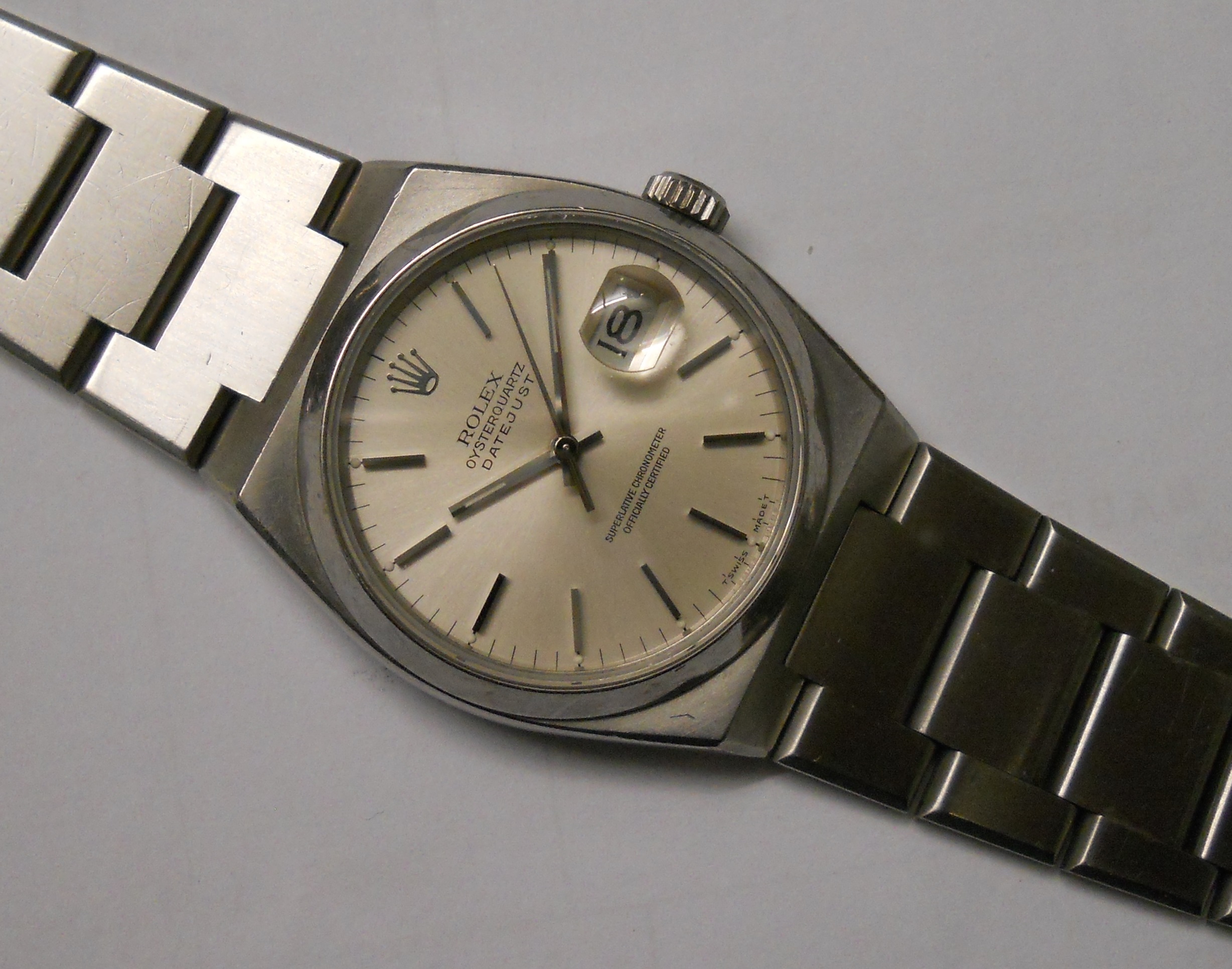
Rolex is by far the most imitated watch. Imitations ranging from obvious cheap copies to difficult to pick fakes that feature every minute detail.  It is widely thought that if a watch DSCN9750that looks like a Rolex, has Rolex signed in all the right places and has a quartz movement (easily picked by the second hand jumping every second rather than sweeping) then, it’s a definite fake.  This is because of the common perception that Rolex never made quartz watches. WRONG.

Rolex did make an in-house quartz that is considered by some to be the finest ever made.

It started in the early 70’s when Rolex, along with several other quality watchmakers, used a generic Swiss movement, the Beta 21, and produced only, and precisely 1,000 watches.

In 1977, Rolex released the Oysterquatz featuring their own in-house movement, caliber 5035 and 5055 .

The example I have here is a 1987 example but it could be any age during this model’s amazing 24 year production run…..because neither the style or the movement hardly changed during its entire existence.

The design of the watch is far removed from the classic Rolex style with completely angular case, an integrated band with a polished finish and sapphire glass.

DSCN9745The 11 jewel 5035 movement is finished to an even higher standard than the superb mechanical Rolexes. It is fair to say that no other quartz movement ever produced can compare to it from the standpoint of pure beauty.

Compared to its mechanical counterpart, this watch is at least 10 times more accurate, it requires less servicing (my example here has never been serviced in nearly 30 years!) and it cost less than the mechanical. Despite these obvious advantages, Rolex didn’t bother to promote it much and in 24 years, only 105,097 watches were produced.

In 2001, the Oysterquatz was discontinued.

Posted in Chronometer, Rolex | Tagged , , , , , , | Leave a comment

Poljot Sturmanski

The First Watch in Space (55 years ago today)

YuriIn 1957, the Soviet Union put the first satellite, Sputnik 1, into earth orbit. A month later, Laika, a stray dog from the streets of Moscow, became the first living creature in space. By 1961 the Soviets were well in front in the “space race” and to the great embarrassment of the “Free World”, pulled further in front when Yuri Gagarin became the first man in space.

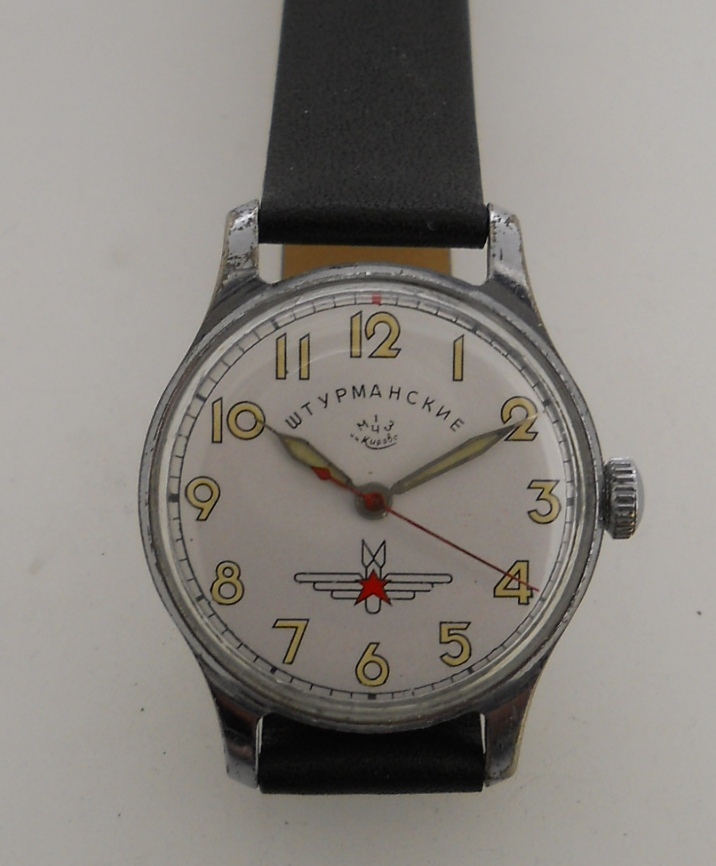
On Uris’ wrist was this Poljot Sturmanskie.

DSCN9511The Soviets may have been at the vanguard of space technology but nowhere near it when it came to timepieces; technically, the Sturmanskie is a very ordinary watch.

Let’s start with the movement. Small but quite rugged, this movement uses a copy of superb Swiss incabloc shock protection device. It has a hacking device (where the watch is stoped when in the hand setting mode for accurate synchronisation), a feature rarely found in Swiss watches. It has a Breguet (overcoil ) hairspring, a feature found in only the most accurate Swiss watches. The finish is pretty good and very good on the screw heads and other steel parts.

The dial is what really makes this otherwise ordinary looking watch stand out; large full figure numerals with black outline, long Cyrillic character branding stretching from the 10 to the 2, beautiful sword shaped hands tapering to long pointed sticks paired with a nice red sweep second hand and, best of all, an emblem of a winged bomb with a red Soviet star over it leaves us in no doubt of this watch’s military heritage.

Finally, the case. Chrome plated! Why Oh Why? The back is stainless steel, but so thin you can almost see through it. The crown is light as are the seals. Needless to say, the case is a disappointment.

The dimensions are a little disappointing too; very small for a military watch, only 33mm in diameter and very thick, 13mm, almost twice that of a comparable Swiss watch.

The Poljot Sturmanskie was, from the early 1950’s, presented to Soviet pilots upon their graduation, the model was not available to the general public. During the sixties, it was made available to the public and there was some variations produced.

A very nice watch and part of history.

Posted in Poljot, Soviet Watch | Tagged , , , , , , , , | Leave a comment

One For The Connoisseur

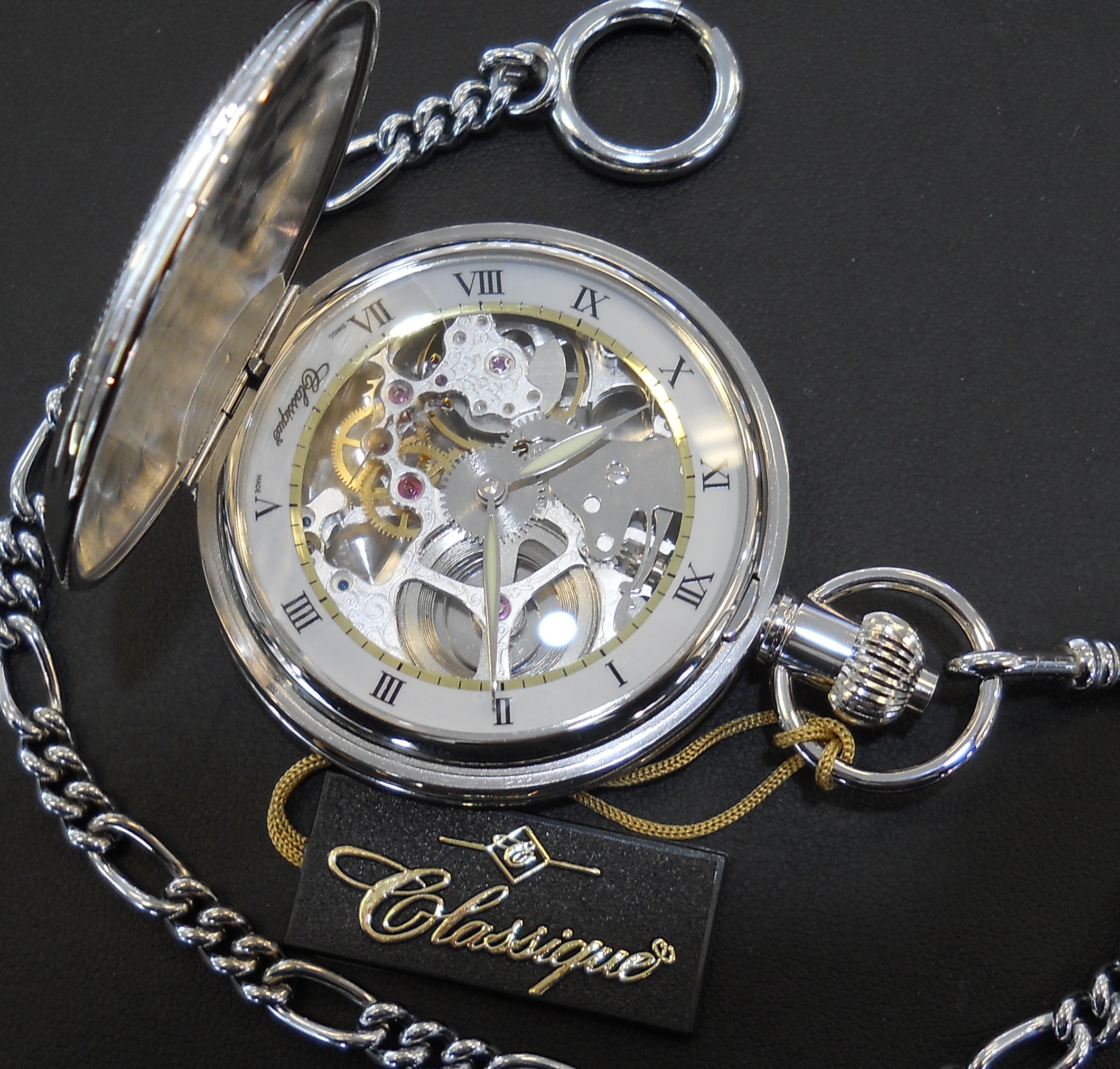
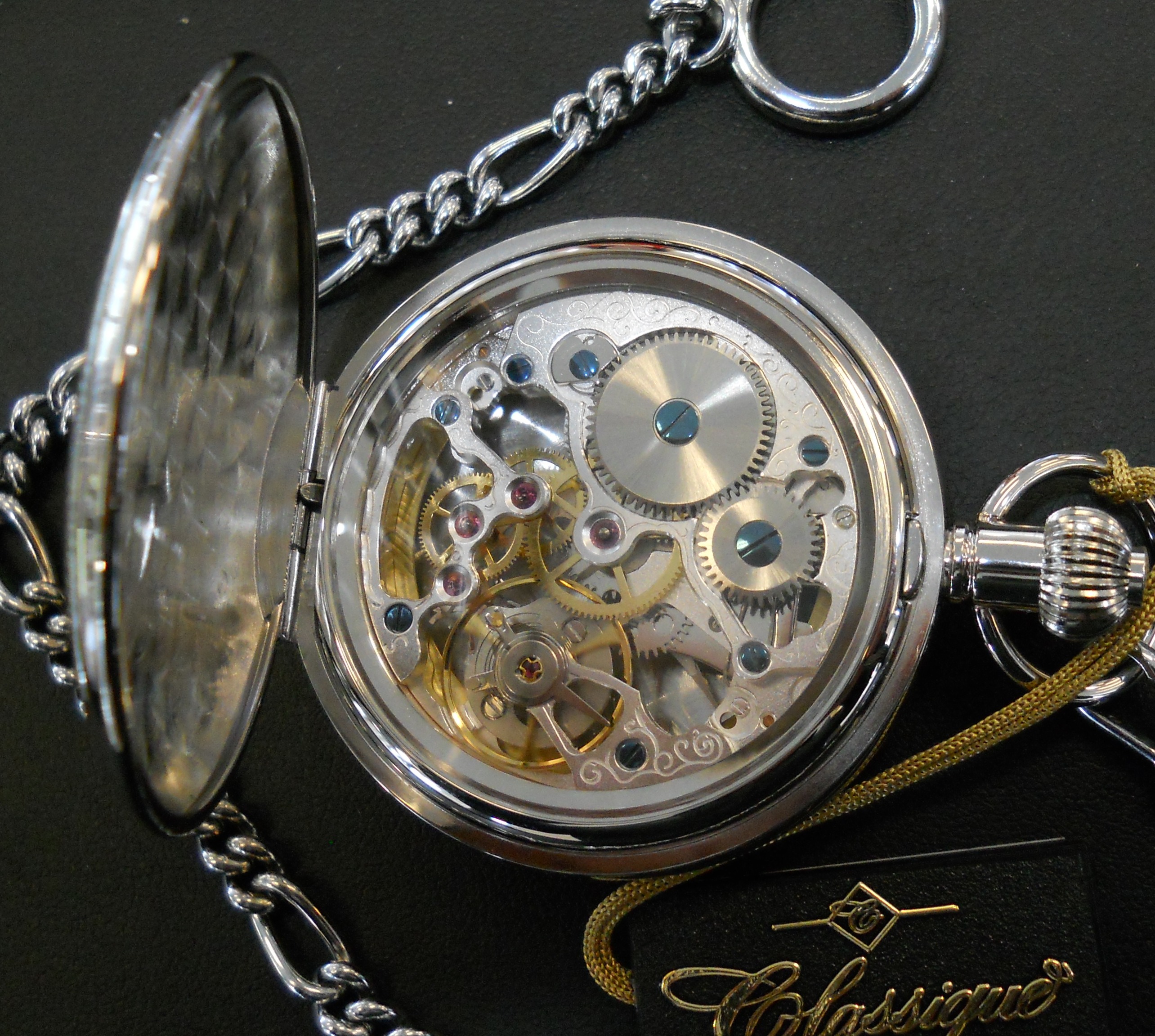
DSCN9286This is one for the connoisseur of classic, simple, mechanical beauty.
Apart from the shock proof system, which looks very much like the Seiko Diashock system, the technology is standard, Swiss 19th century. In fact, I doubt if the tooling for this movement has changed any more than minutely since it was first produced just after the first world war.
So now in the teen years of the 21st century where micro electronics rule supreme, where mechanical technology, that once ruled, has become a novel curiosity, this “tarted up” example of old technology that was once taken for granted, is now an object of marvel and beauty by all that cast their eyes upon it.

This is how it’s done:

mvtTake a standard Unitas 6497 17 jewel pocket watch movement, cut as much out of the plates as possible so as to reveal all of the mechanical components, put a high quality finish on all components, plate the bridges and plates with palladium, engrave the plates with a classic pattern, blue the screws, install the movement into a double sided glass case without a dial and that’s it!


DSCN9289This is the result. An object of timeless mechanical beauty that is perfect for a very special gift such as a 21st, graduation, special achievement etc.

I can only find one fault with this object of allurement……its price! At $850 it is way under priced!

Posted on by robswatches | Leave a comment

Tudor Oyster 1966

DSCN8895

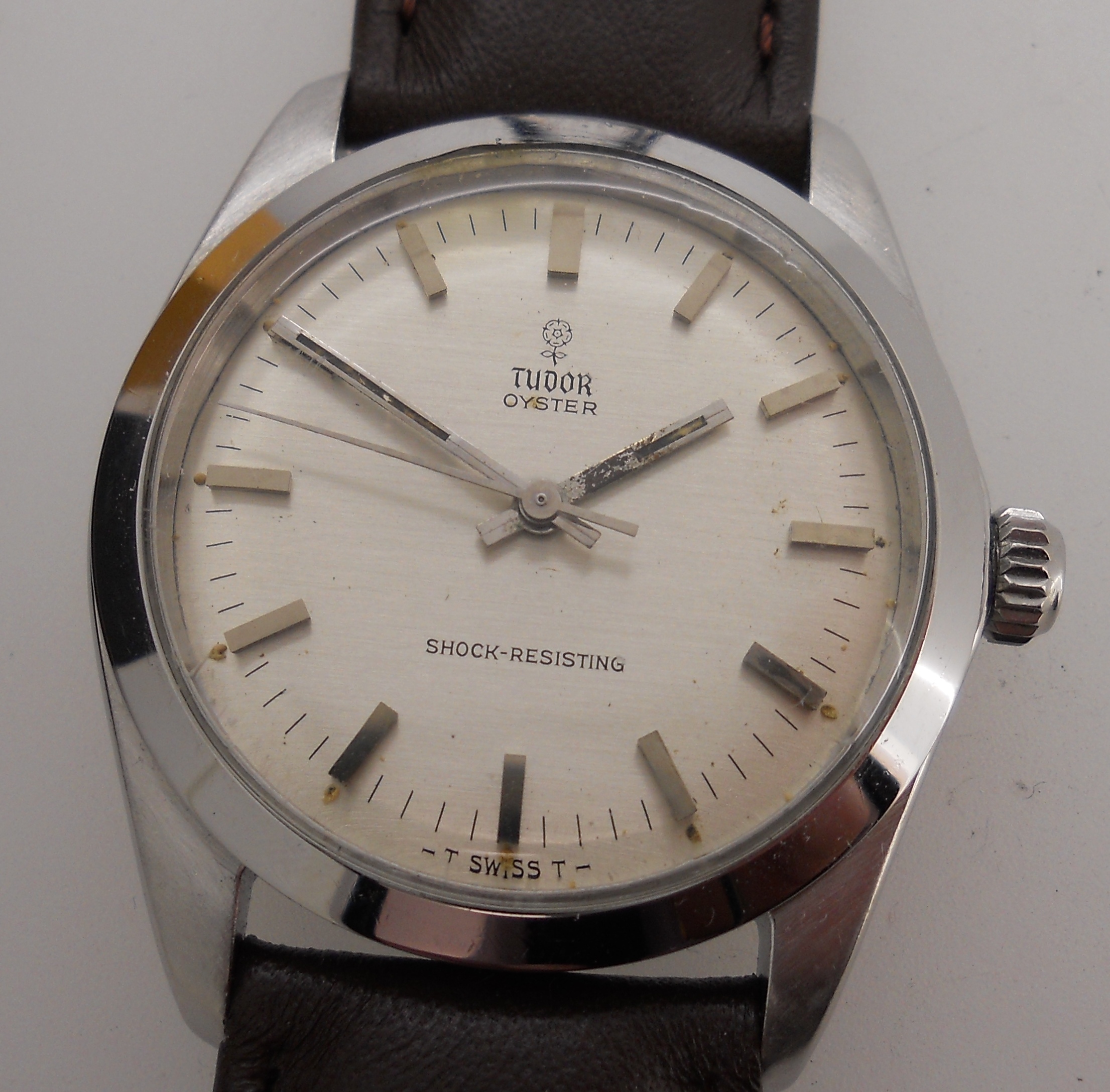
DSCN8896This is not a Rolex! Every time I see Tudor advertised for sale, the headline is something like “Rolex Tudor”. This annoys me. Tudor is a separate product and although both come under the same parent company and Tudor came about 40 years after Rolex, the two are aimed at two different markets.

A brief history of Tudor.
By virtue of its Oyster Case, Rolex had cemented itself as a leader in the upper mass market, competing in the marketplace with Omega, Certina, Longines, Zenith etc.

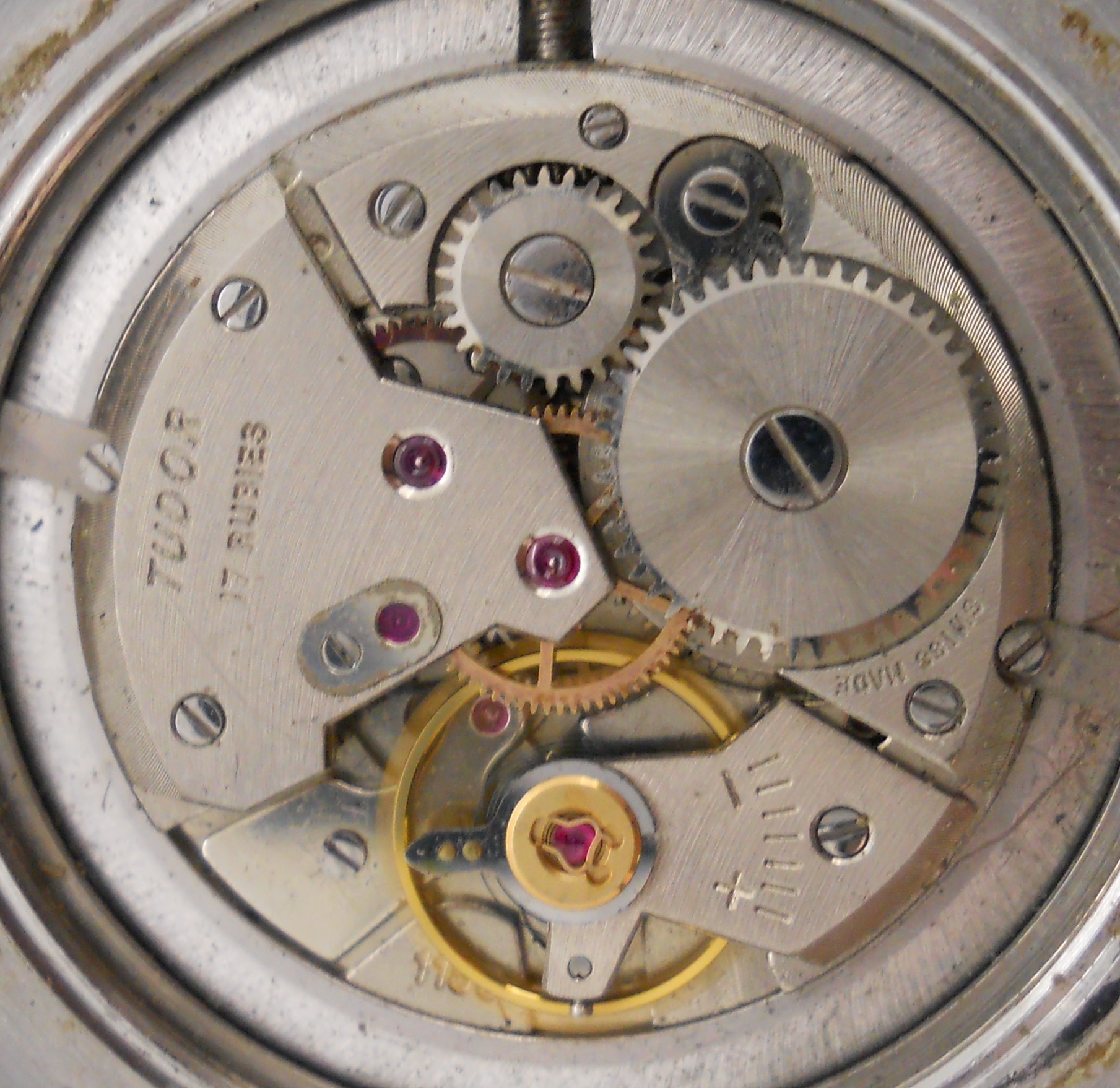
Thirty eight years after Rolex, Hans Wilsdorf started Tudor. To make Tudor stand out in a cluttered market, Rolex cases where used. The movements used were the standard but brilliant ETA’s, manuals and automatics. The in house Rolex automatics of the 40’s through to the 70’s were not a patch on their DSCN8900competitors, watchmakers were gleefully bagging out the Rolex as “rubbish”, but the Oyster Case was its great virtue. So, the Tudor enjoyed instant success with the Oyster case and good ETA movements…….A better watch than Rolex, some would say and has actually been referred to as the thinking man’s Rolex.

Over the years Tudor moved further and further away from its big brother until the present day where it bears no resemblance and has a clear direction of its own.

This model.

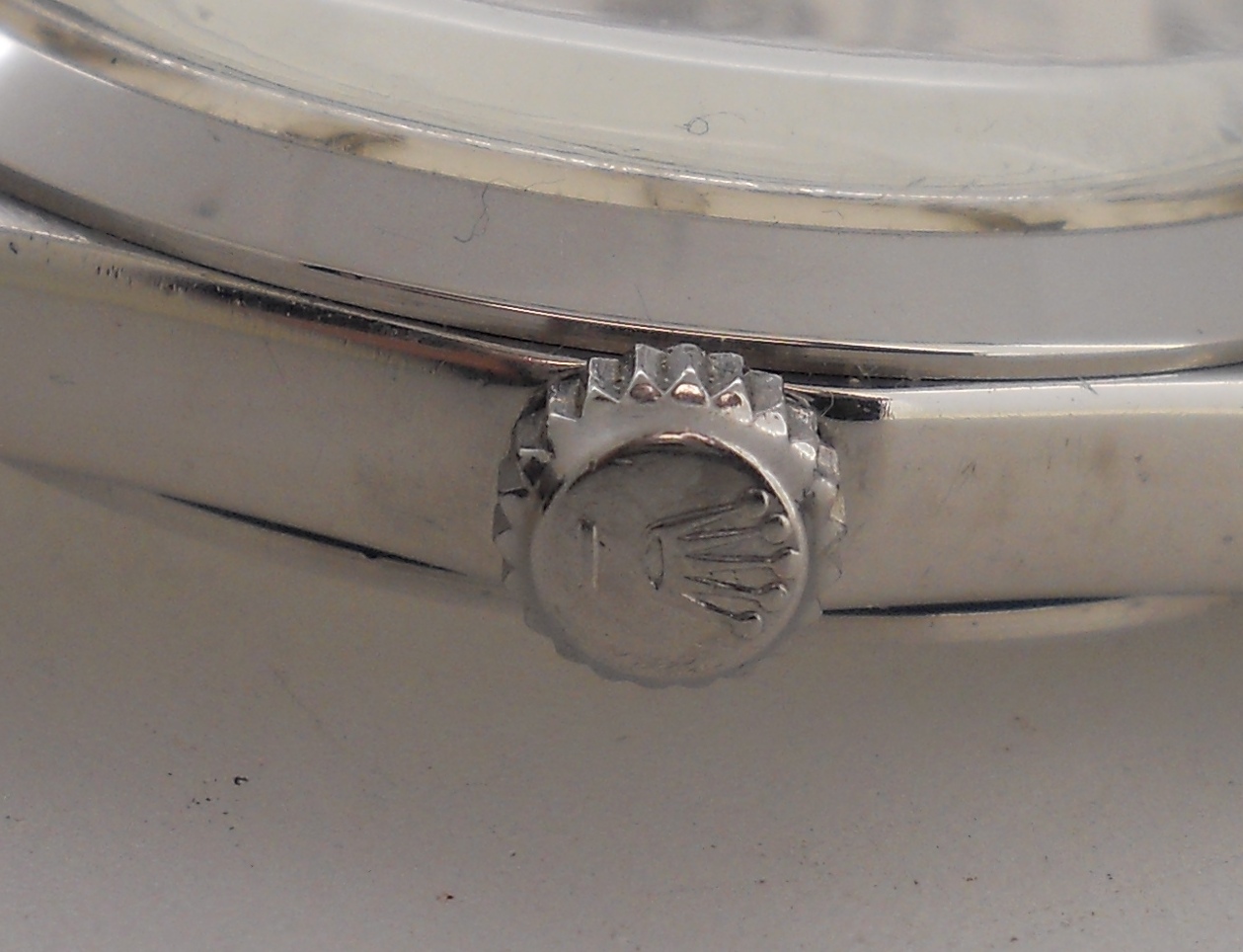
DSCN7371This model is classic Tudor, a 1966 model (twenty years into this young company’s history). It uses a basic Ebauche ETA 1100 manual wind movement, no date, housed in a Rolex Oyster case. And, like all Tudor Oysters it lets it be known loud and clear having “ORIGINAL CASE BY ROLEX GENEVA” etched into the back along with the Rolex crown emblem. The crown logo is also seen on the winding crown.

So, although the Tudor may not have the pedigree of Rolex or have some of the world’s most desirable models, that isn’t to say it should be snubbed. It is a unique watch, basic but a top performer that holds an important place in watchmaking history.

Posted in Rolex, Tudor | Tagged , , , , , , | Leave a comment

Omega Seamaster 1968

DSCN8687The Seamaster was the most popular series in the Omega range during the eminent years of watchmaking. Here I have an excellent example of an ordinary looking but nonetheless beautiful Seamaster from 1968.

The flagship of the Omega range was the Constellation and, in its shadow, was the Seamaster. But there wasn’t a lot of difference between them, technically or aesthetically. I have, on several occasions mistaken one for the other when viewed from the distance of the wearers’ wrist.
I think the difference is slight. The Constellation is a certified chronometer, which means it complies (and tested) to a standard of performance and construction. But the movement that was used in all models, the 500 and 700 series were, as far as I know, identical. So, performance should be consistent between the two even though the Seamaster was not tested to chronometer standards.
The quality of the entire Omega range was at such a standard that just about all movements would have passed the chronometer tests.

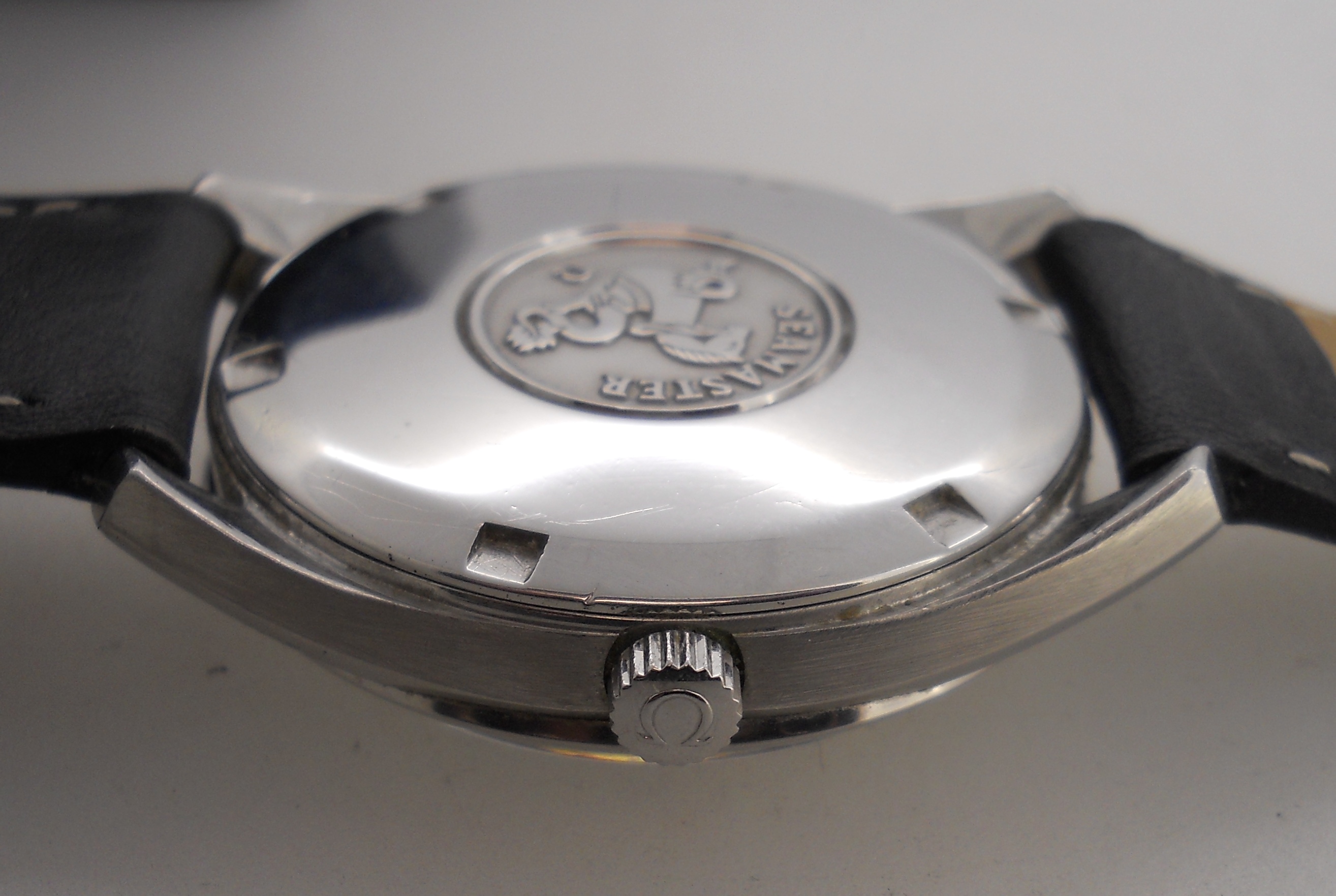
Seamaster medallion and signed crown

Seamaster medallion and signed crown

Back to this watch. By 1968 the “Pie Pan” dial was replaced with much plainer dials as this but whatever it was about the pie pans that made them age so much was not included in their successors. Here we see an almost perfect dial with minimal aging.

We also have beautiful hands, delightful raised index markers and a rare magnifying “bubble” covering both the day and date. The interesting, and innovative thing about the magnifier is that it bulges downwards not upwards as all others do. This has always been a problem with date bubbles because by protruding up from the plane of the glass they scratch first and easily. The date has a quick change feature, essential when you have both day and date display. Quick date change and day/date display where not new but top end features in 1968

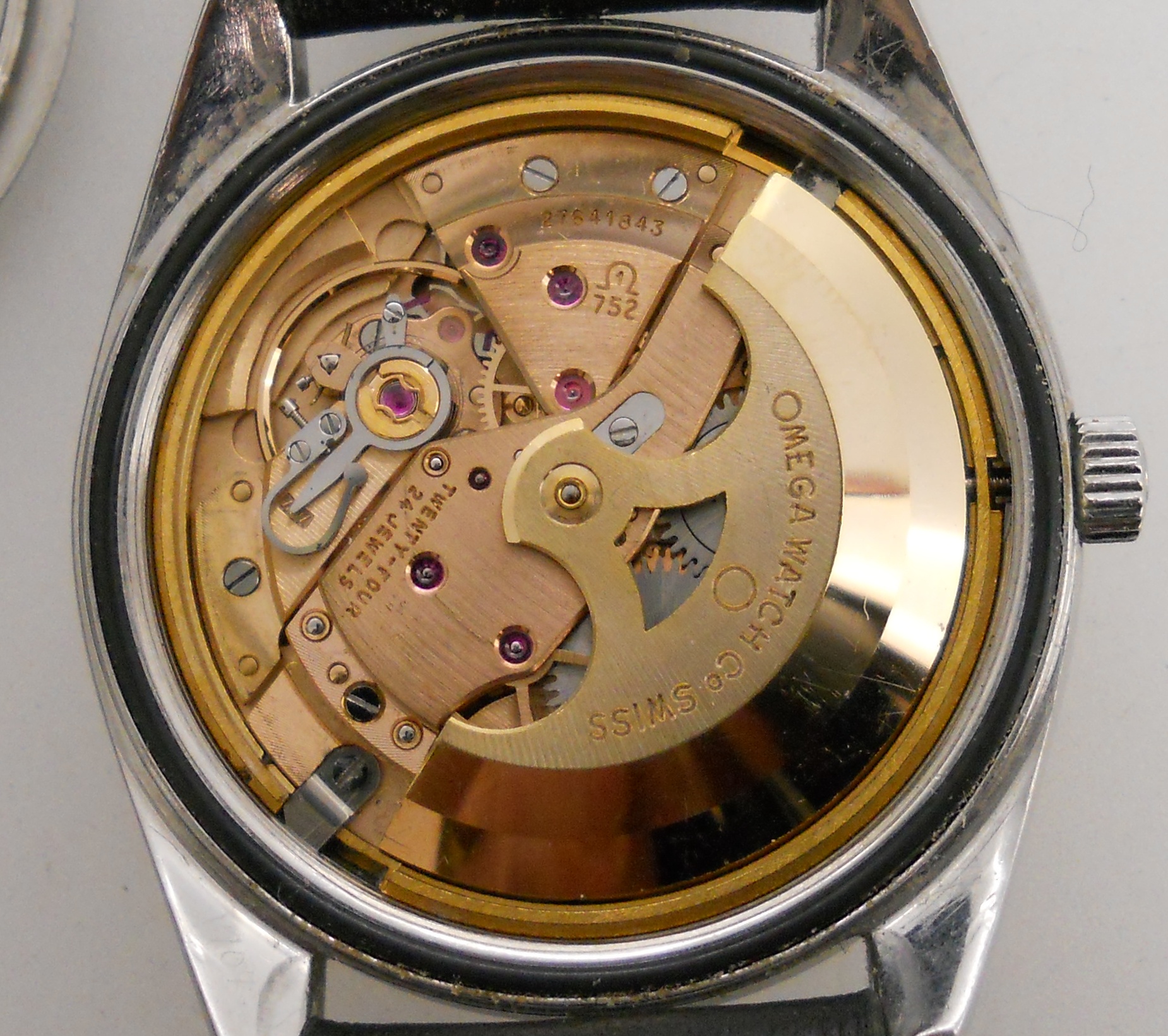
I can't stop raving about these beautiful movements. This is the 752 one of the last of this series

I can’t stop raving about these beautiful movements. This is the 752 one of the last of this series

The rest is standard Omega style and quality: The Seamaster medallion on the back, the signed water resistant crown, the amazing 752 24 jewel movement.
The only thing that I dislike about this masterpiece is that the bezel is plain a little wide taking the finesse away from the style making it appear a little bulky. A precursor of what was to come in the 70’s.

It is all original except the strap. Signed five times including the watermark on the glass.

The Seamaster is all it’s cracked up to be; Water resistant, tough, reliable, accurate and durable.

Posted in Omega, Seamaster | Tagged , , , , | 2 Comments