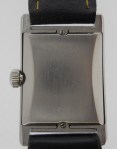
Relide 1965c

DSCN1688 

This watch was made sometime in the mid sixties and until I aquired it, had never been
opened. I doubt if it’s even been worn!

Only the dial is signed but this watch is worthy of a place in my collection by virtue
of the superb compressor case and the toughest of all automatic movements, the
Felsa 4007

An ordinary looking watch but great quality and in pristine condition.


DSCN1696

Posted in Relide | Tagged , , | Leave a comment

Bulova Accutron 1971

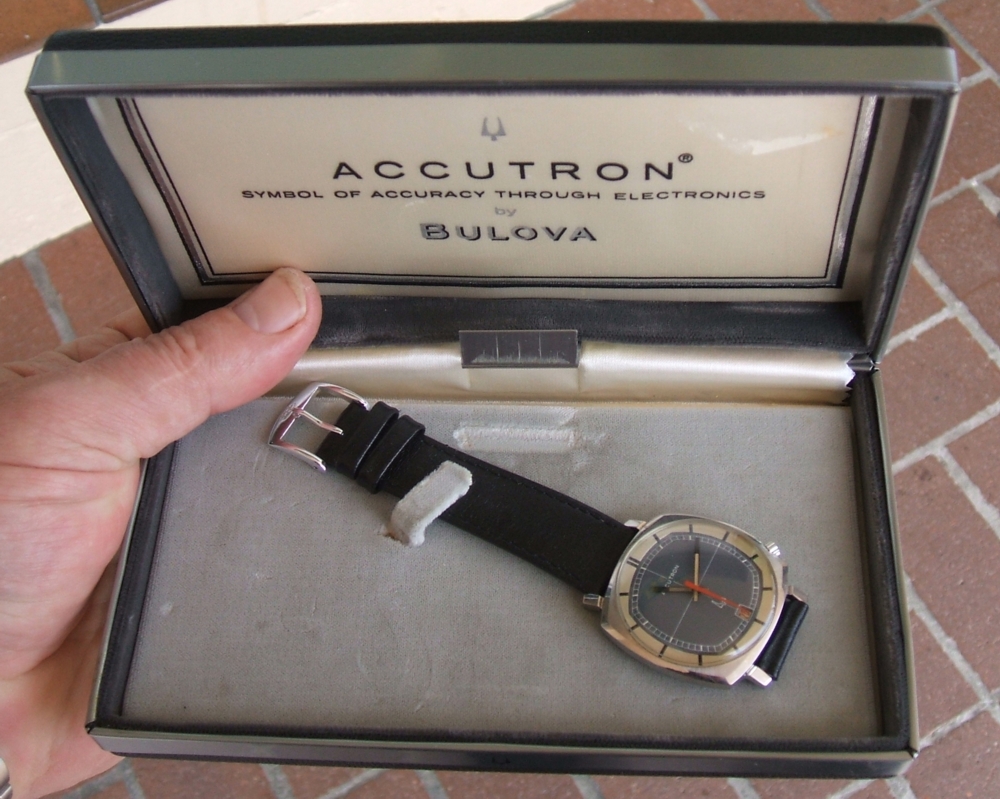
  In 1971, the Bulova accutron was 11 years old. Any early thoughts that  it was nothing  than a gimmick had long been dismissed.. It had nowhere near replaced the mechanical, Bulova themselves had a complete range of mechanicals that they marketed alongside the accutron and, in fact, outsold it. But the accutron had established itself firmly in its small niche of the marketplace as a reliable and extremely accurate watch. 

 The accutron movement changed little during its existence. This calibre 2181 was released in 1967 and featured a date and stem and crown for setting.

The styles did change with the fashion and here we have a watch of its era: rounded rectangular case with squared off hands and yet it manages to still be elegant.

Not only that but this example is in perfect condition and was presented to me in its original box: a rareity

A very pleasant and unique watch.

Posted in Accutron, Bulova | Tagged , , , | Leave a comment

Boctock 1975c

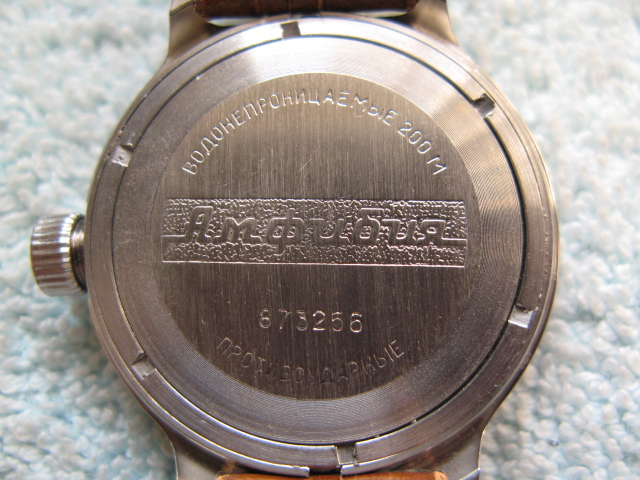
   This is the only Russian watch in my collection, a divers from sometime in the 70s.

 I know very little about Russian watches except that all of those that I have come accross are nowhere near even average grade Swiss: this Boctock is no exception.

 All the script on this is in Russian so it was most likely produced for the domestic market. I see 200m on the back which would indicate a claim of being 200 metre water resist, drawing a bit of a long bow I think but I understand that the Soviet consumer affairs department (if it existed) were even slacker than it’s Australian counterpart

 Still during the old iron curtain days, Eastern block industries had no competition from the West. Some Russian watches were exported; I remember the Sekonda brand that seemed popular in the UK, but these competed in the West purely on price.

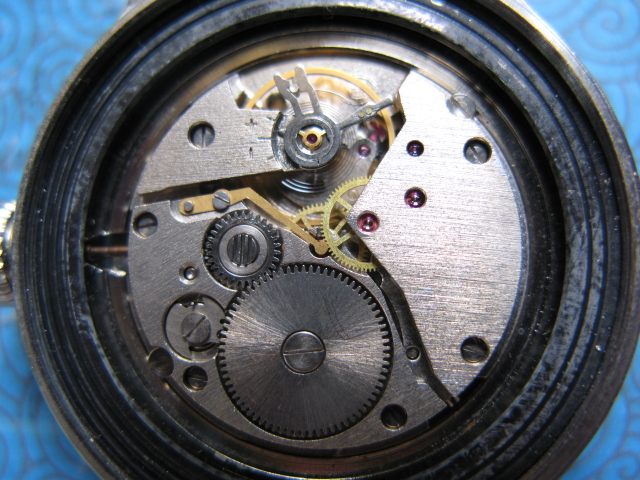
 The movement is jewelled (17) with lever escapement, the finish is poor and I think the case is very ordinary.  The back and glass are very thin for a 200m watch.

 To be fair, the Swiss, English and Japanese all have examples of cheap low grade watches that I would not have in my collection. So why do I include this Boctock? Because it’s got personality, it’s different to everything else I’ve got and it’s Russian.

Posted in Boctock | Tagged , , , | Leave a comment

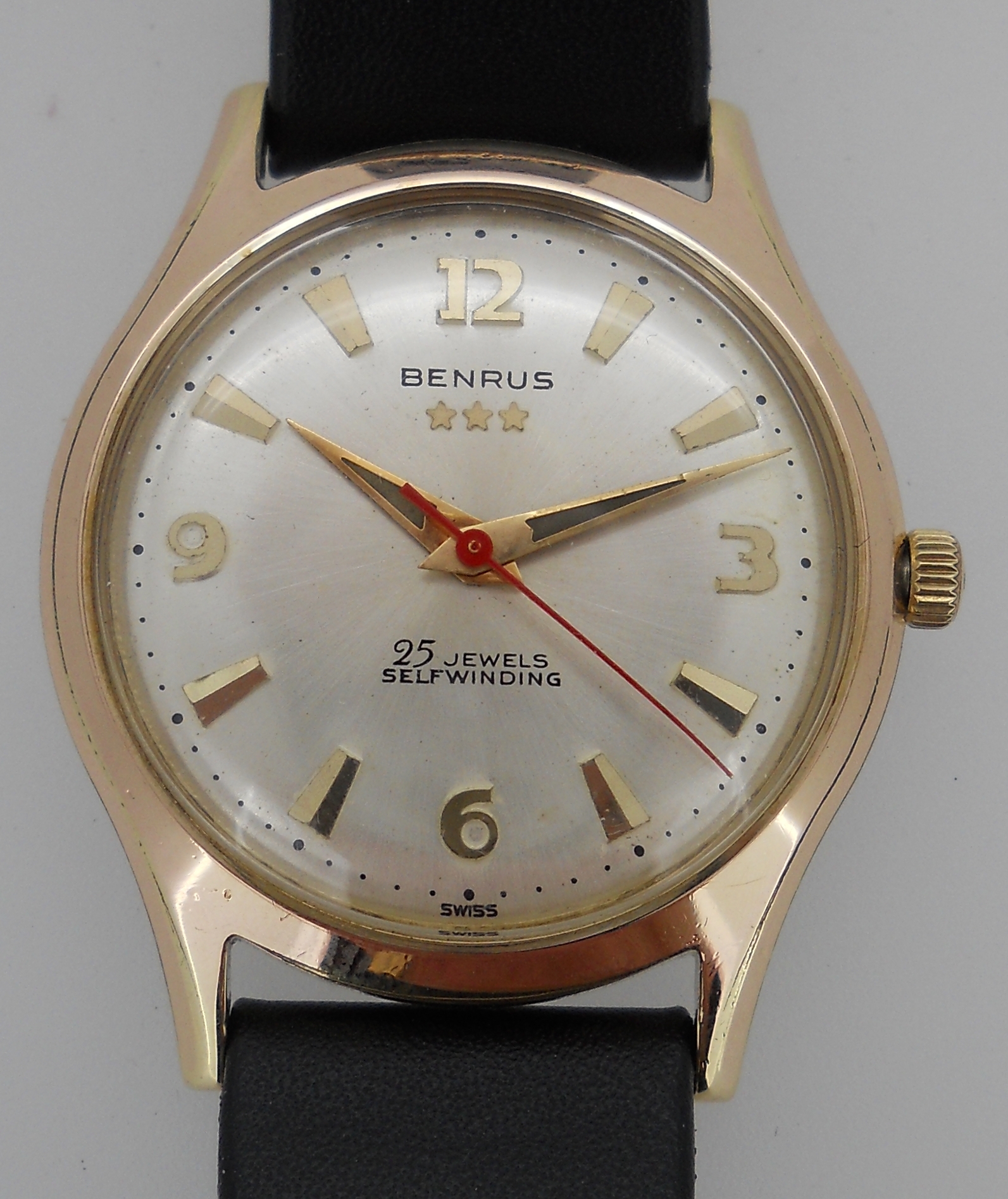
Benrus 1960c


This rather boring looking Benrus from around 1960 is typical of a mid range watch of the period: there was little around as far as adventurous designs go. People were buying watches on their technical advancement. In the 50s, the buzzword was centre second or sweep hand and for those who could afford the cutting edge, it was automatic wind and or date. 

This watch is nice and neat, clear to read, polished raised markers, luminous hands and the distinctive red sweep hand (you want everyone to see that you’ve got one). 

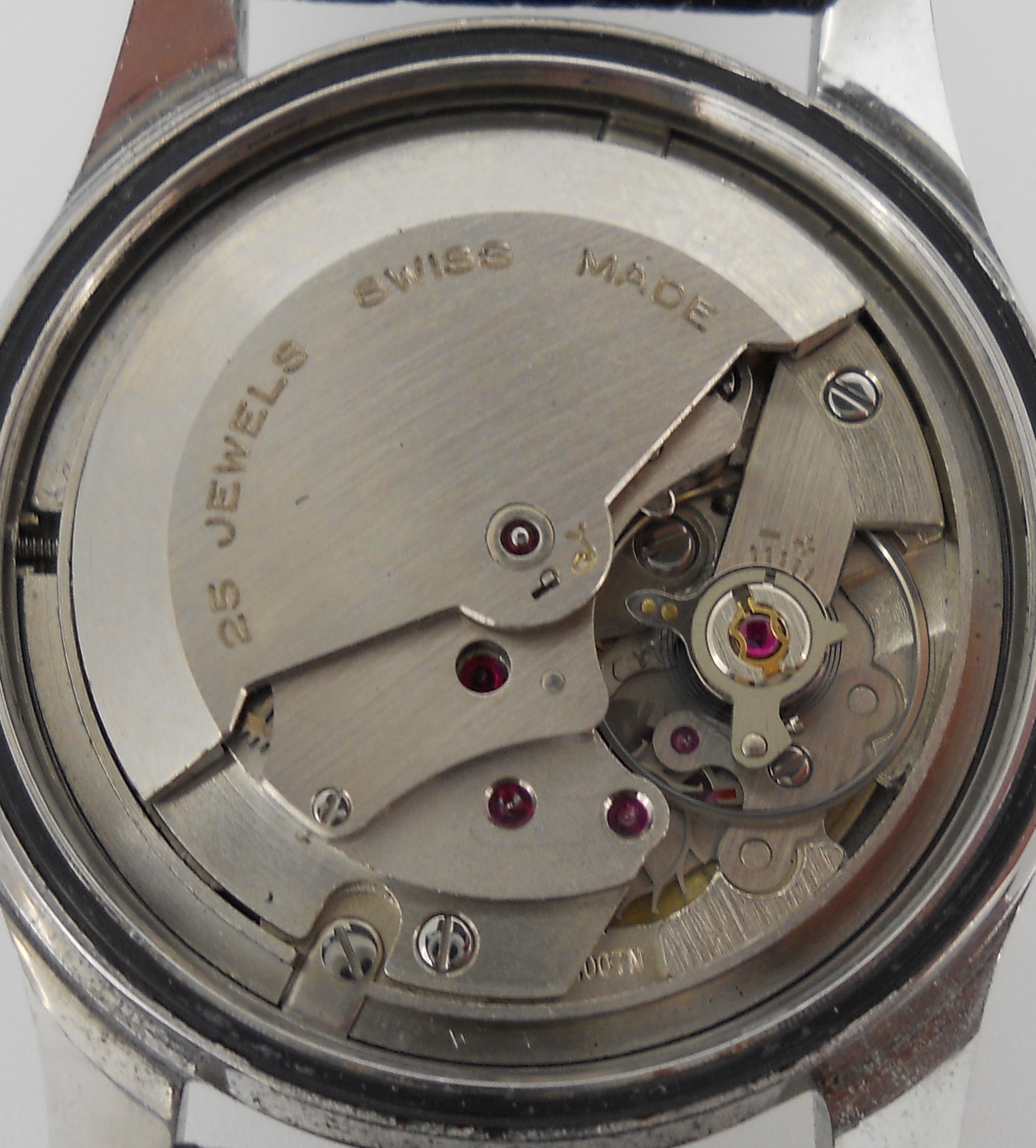
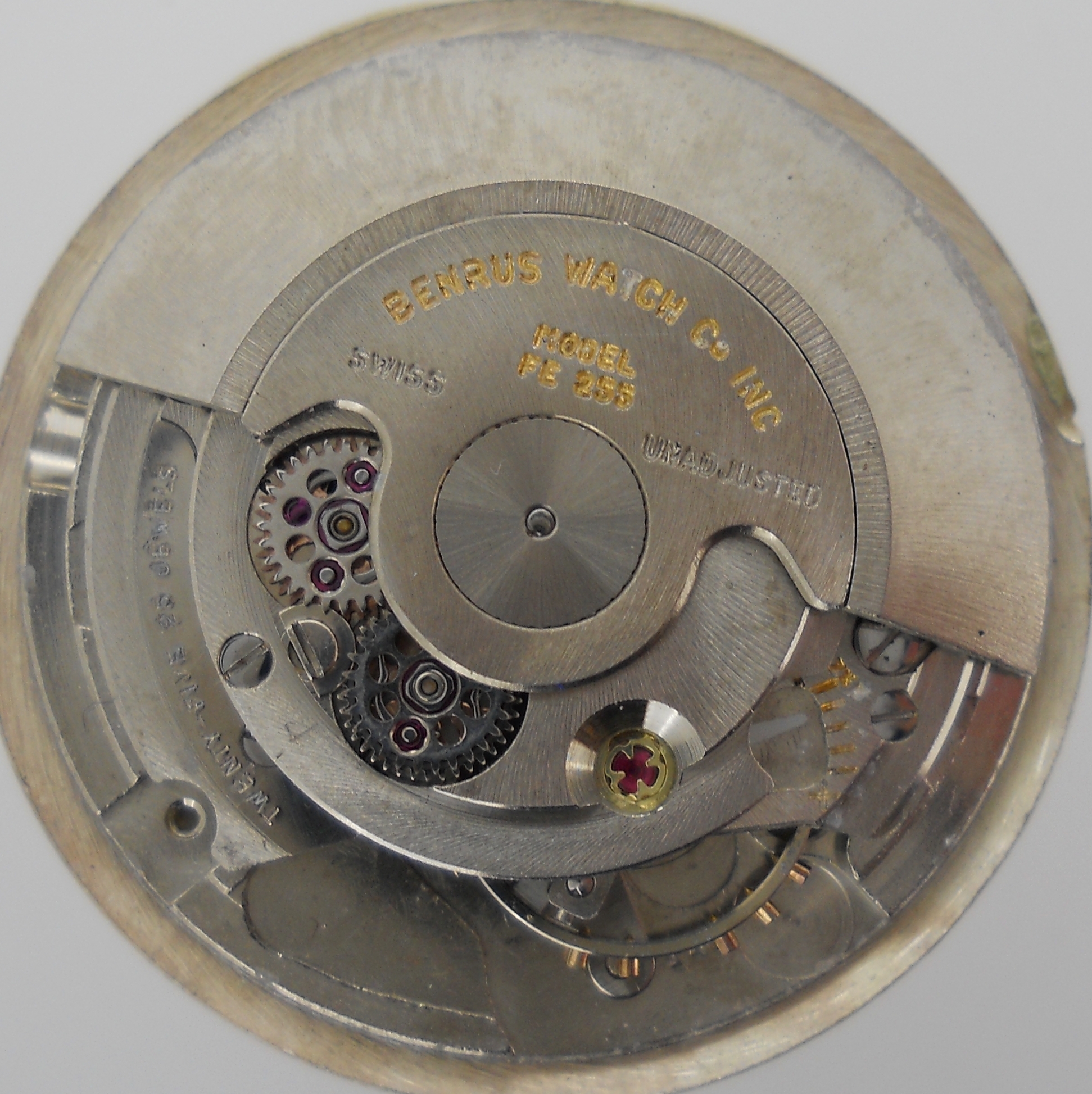
This is a US brand but the movement is the Swiss ETA 2450, 25 jewel automatic. At the time, you had to spend a lot of money to have a watch with a better movement.

 The case is good quality, gold plate, water resistant in house (made by Benrus)

 As I said not very exciting but good mid range quality and typical of the period.

 The Benrus Company  

Benrus was started sometime in the early 20s by a Romanian immigrant to the US Benjamin Lazrus and named by combining his given and family names. They started by manufacturing watch cases and importing Swiss Ebauche movements. The company gained a huge advantage during and after WWII because, unlike the larger US watch factories, like Hamilton, Waltham and Elgin, they were not pressed into manufacturing for the war effort. They became quite powerfull and popular mainly in the US.  At one point in the 50s they almost brought out Hamilton.

During this period Benrus developed some innovative styles and some actually had personality. During the highly competitive 70s they went for cheaper movements, looked to Asia for dials and cases and the brand existed in name only. Inevitably, the brand disappeared sometime soon after

Posted in Benrus | Tagged , , | Leave a comment

Rado Purple Gazelle 1970c


Rado have gone through a couple of image makeovers since it first produced watches in 1957.  The company actually started in 1916 and produced watch movements initially but since 1957 (as far as I know) all movements have Ebauche, mainly ETA’s

Rado have been very innovative in the materials used and their designs have mostly  been distinctive, sometimes so distinctive to the point of ugly, (see another Rado post in this blog)

The purple Gazelle is a smart looking well appointed (for the early 70’s) sports watch; water resistant, mineral crystal glass, day/date, integrated bracelet, powered by the ETA 2846 and signed 5 times.

This watch is quite amazing because it is almost 40 years old and, it seems, has never been worn. On the back is a sticker to give instruction to the owner on how to operate the four function stem. (Hand set, day set, date set and manual wind).

In these days, Rado used a rotating anchor as its logo. The anchor is pivoted in the centre of the red dot and is free to swing around; something like an automatic rotor; Maybe that’s what it represents and perhaps the red represents a jewel.  

A great find.

Posted in Rado | Tagged , , | Leave a comment

Tissot Alpine Rock 1985c

Innovation With Style

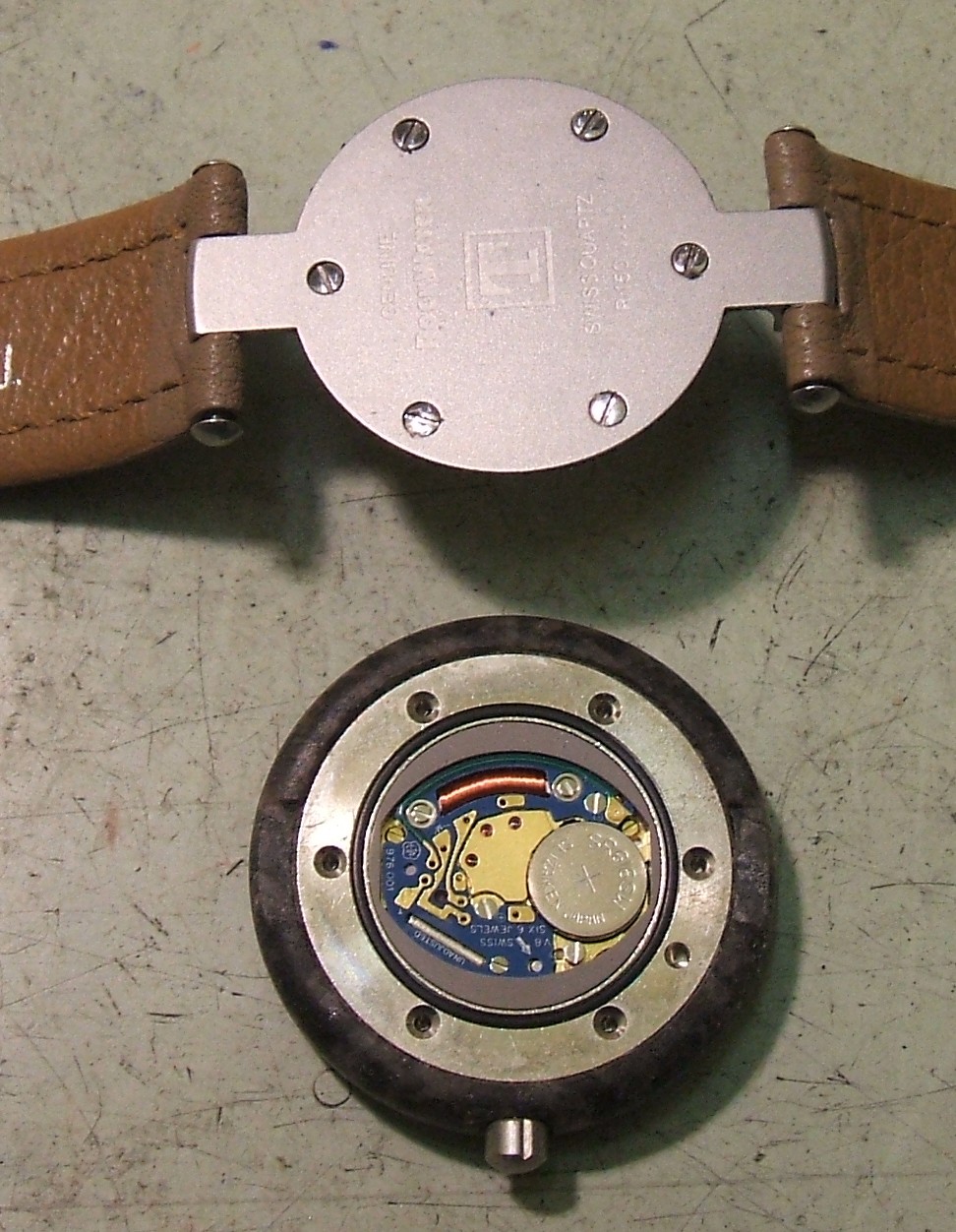
In 1985, Tissot released this beauty; the Alpine RockWatch. It uses a single piece of granite as the case and dial.  The back is screwed to the granite case and has lugs attached to accommodate the strap. The movement is an ETA 976.001 quartz, Tissot had stopped producing their own movements some years previously.

There were a couple technical drawbacks; the case was brittle and once cracked or broken that was it. Also, the glass had to be removed so as to access the hands, essential in an overhaul. This quite often resulted in a broken glass.

There where three sizes available, 23mm, 30mm and 33mm. This is the 30mm Unisex size, quite small.

Another innovation here is the different coloured hands. Early pieces, as this one is, have red (minute) and yellow (hour)  hands, the colours of Swiss hiking trail markers.

It was a huge success in the marketplace, was very distinctive, attractive and a novelty that had no competition. For reasons that I don’t know, it disappeared from the market in 1992.

Tissot was established in 1853 and merged with Omega in 1930. The two brands would have undoubtedly shared technology but to my knowledge never shared componentry and definitely maintained their respective individuality to this day.

Tissot has been one of the most innovative of watchmakers. It developed the first dual time watch in 1853, the first antimagnetic movement in 1929.  I think that Tissot was the first to use plastic components in the 60’s including case rings (see my Tissot Searock post). In 1971 the company released the first all plastic watch to the horror of the trade who refused to touch them for repair.

This 100% original, including the strap, offering from Tissot is yet another example of cutting edge innovation.

Posted in Tissot | Tagged , , , , , | Leave a comment

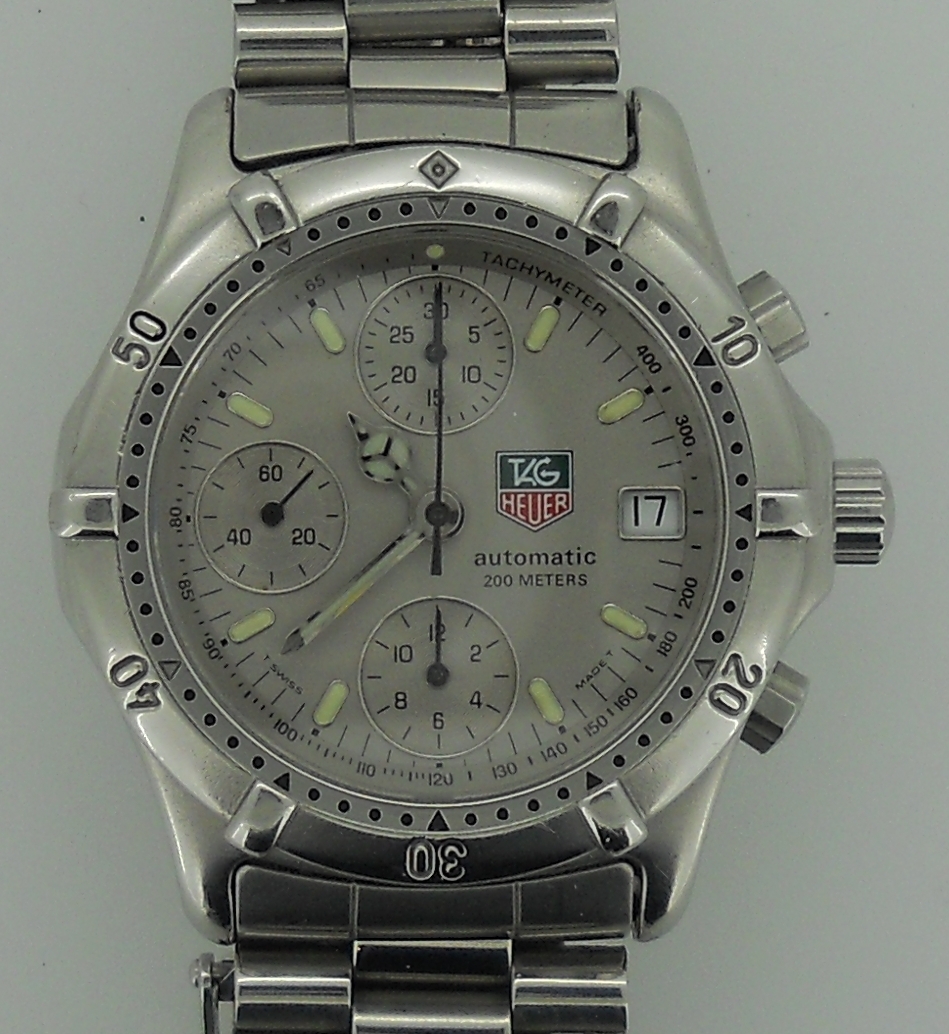
Tag Heuer Auto Chrono 1995c


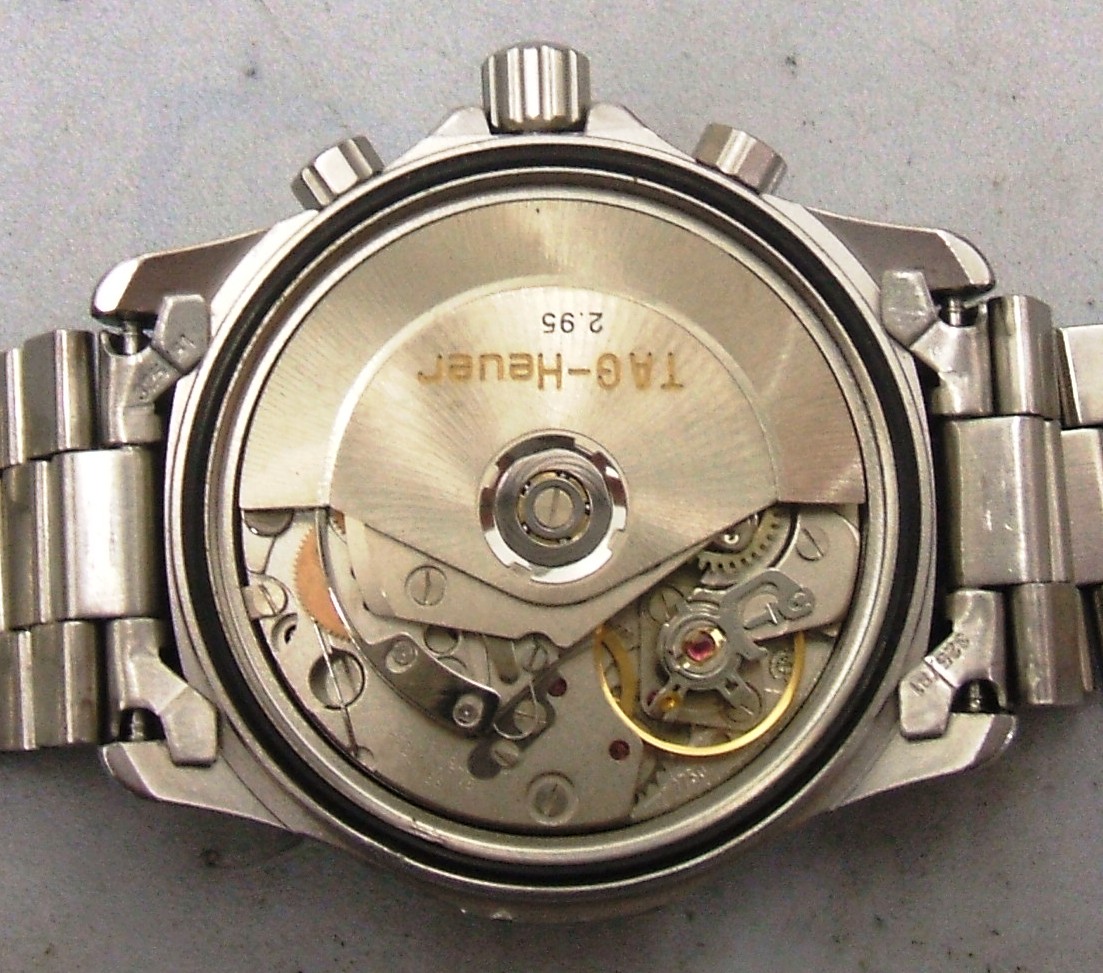
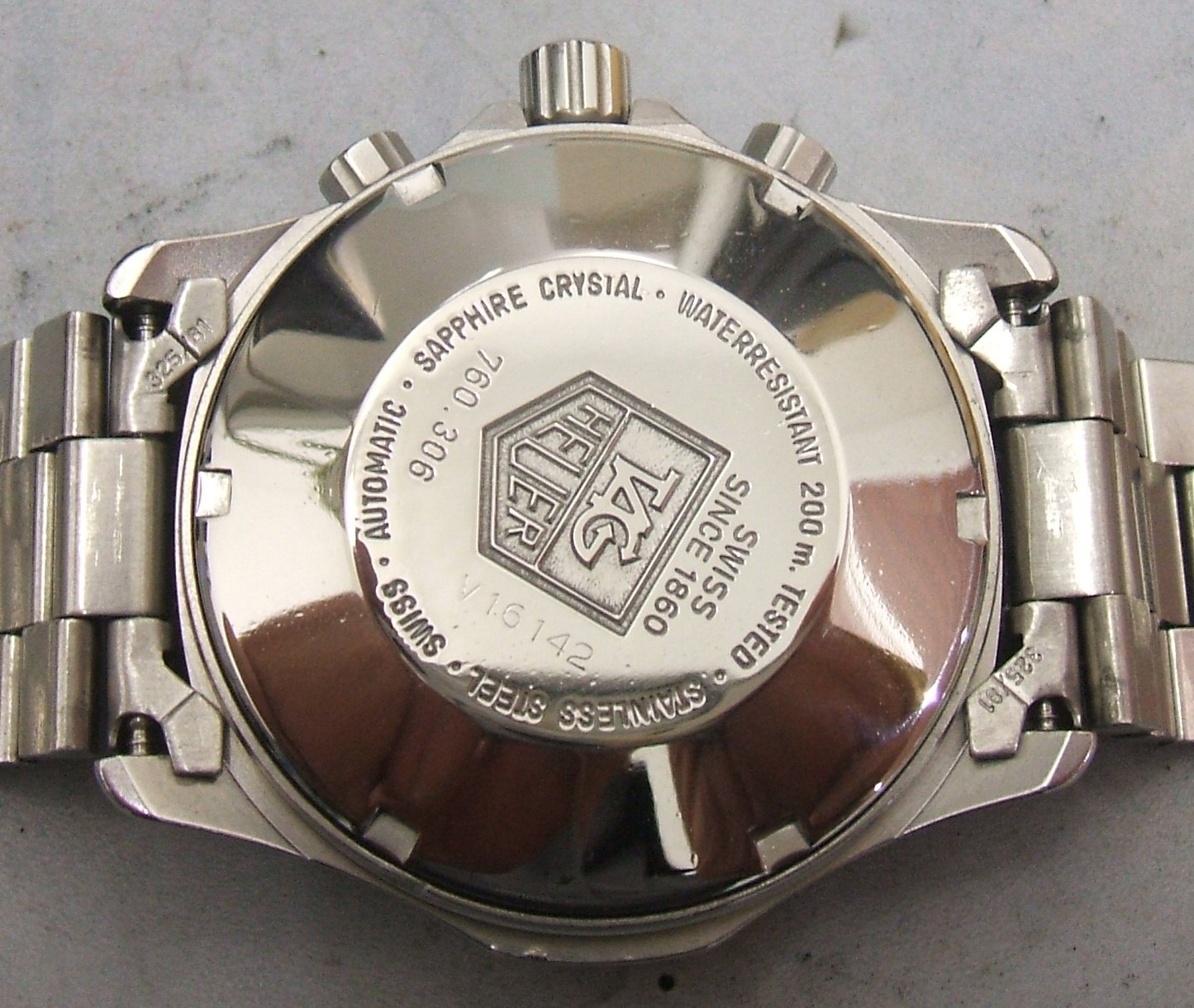
This is a beautiful watch, a three-register chronograph (seconds, minutes and hours) with date, classic Tag Heuer styling, typically sporting with a distinctive dial and hands colour. I’ve had this watch for about a year and it gets a good amount of wrist time (It’s cool to wear a Tag).  It’s typically Tag tough in every way and is one of the few mechanical chronographs available. I haven’t been able to date it but I think it’s about mid 90’s. The movement is the long serving (since 1977) and not too well finished Valjoux 7750 Automatic wind chronograph.

I have never been a big Heuer fan (remember that Tag Heuer came into existence in 1985 when turbocharger manufacturer TAG purchased Heuer). In their long history, Heuer have produced a few timers and some rather ordinary stopwatch movements but little else. Their classic chronographs used Ebauche movements like Valjoux; not a good pedigree I think.

One of Heuer’s greatest claims to fame was that they collaborated with Breitling, Hamilton and Buren to develop, what they claim, was the world’s first automatic chronograph in 1969. This is disputed by Zenith/Movado and Seiko. 

Despite this, in recent times, Tag Heuer has become one of the most desirable watch brands, at least in my part of the world. Aimed squarely at the sports market, I think the success of this brand is the image of virtually indestructibility that they have established through brilliant marketing; over the decades of sponsoring motor racing, having celebrities like F1 racers and Steve McQueen wear the brand etc. 

This is a great, tough, well made watch in the traditional sense and has a special place in my collection.

Posted in Chronograph, Tag Heuer | Tagged , , , | Leave a comment

Wyler 1950c


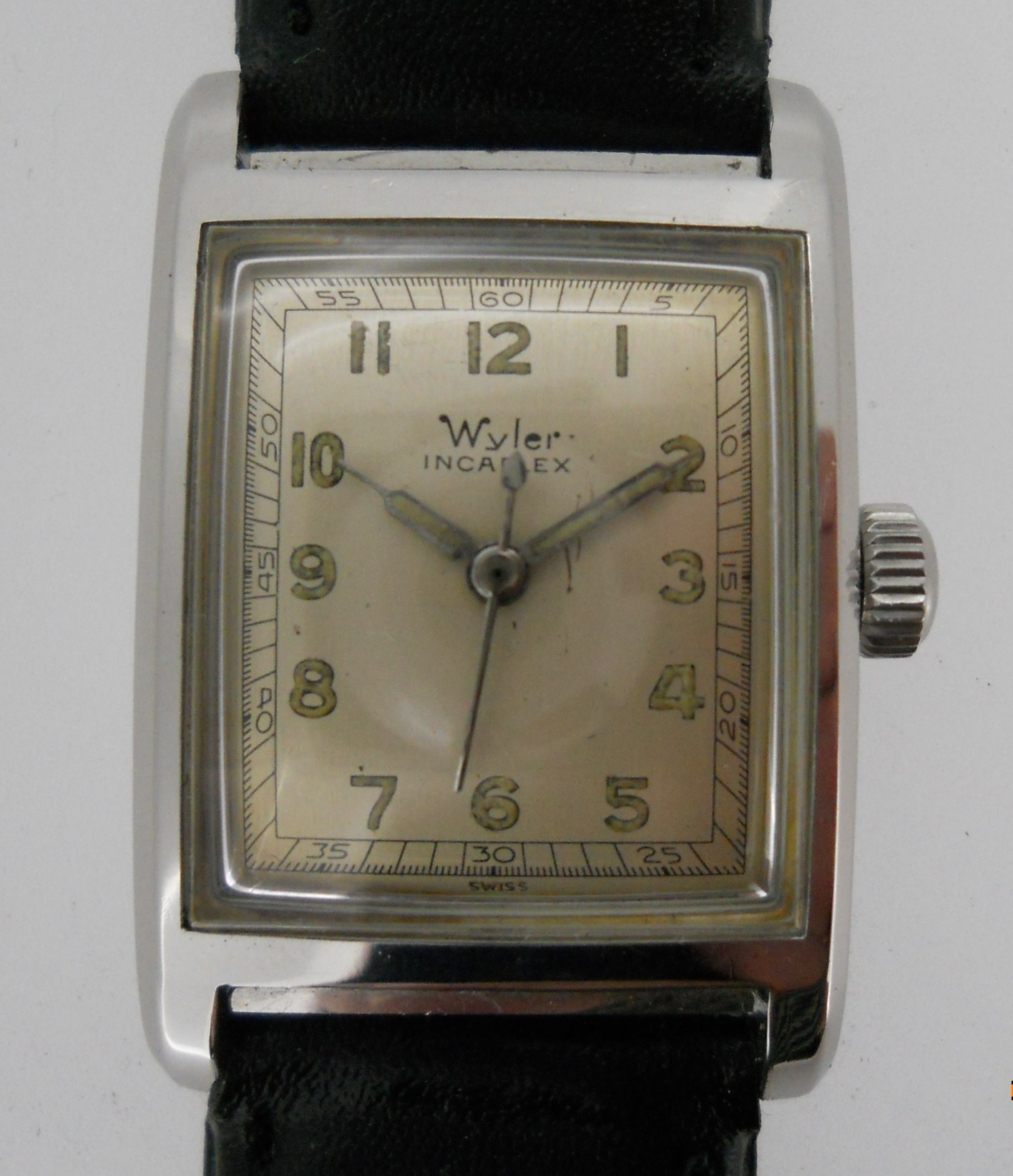
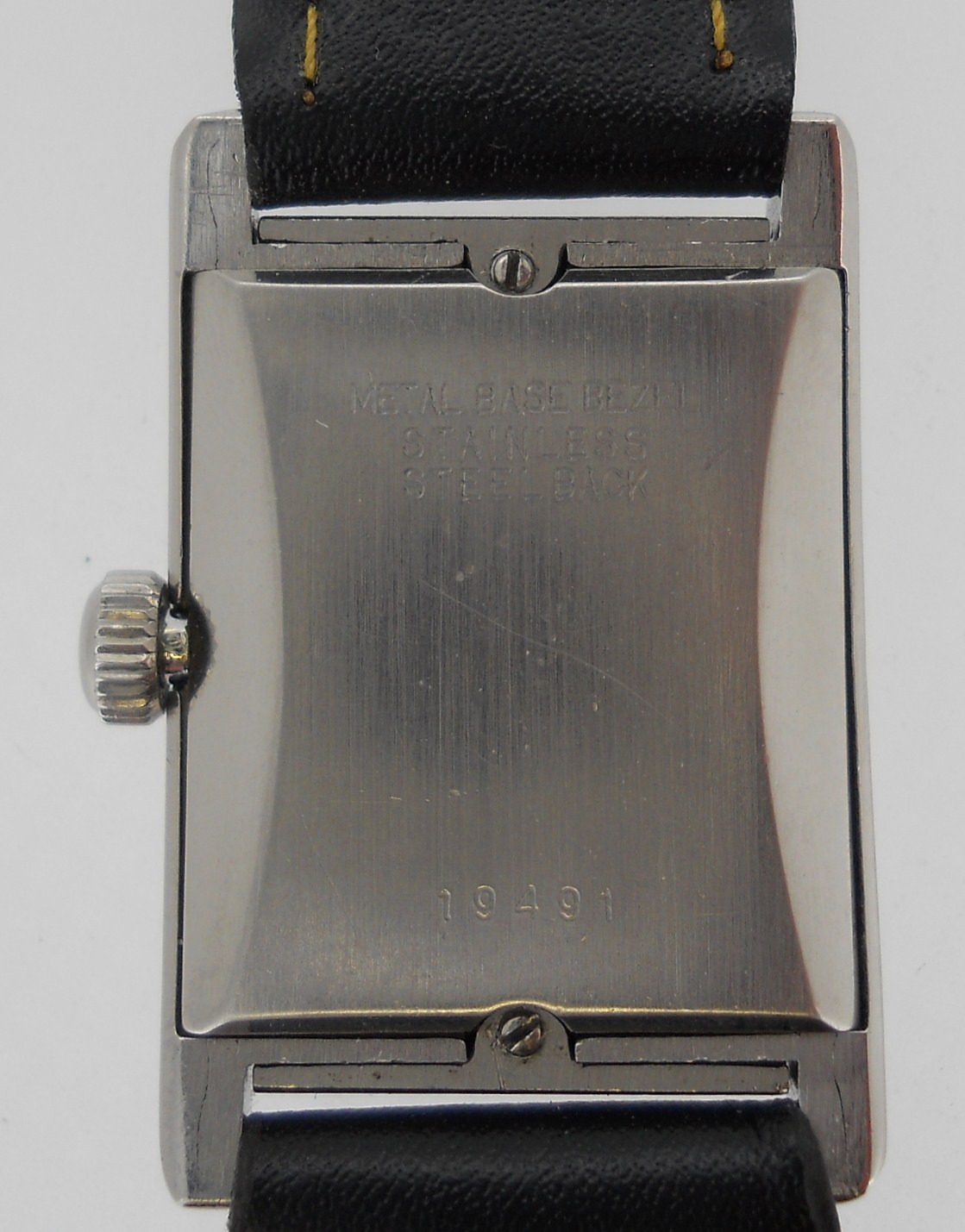
This Wyler from about 1950 was very advanced for the time. I don’t think I have another watch from this era that is water-resistant and shock protected and, surprisingly, this mid size watch is still quite dressy. The fashion of the forties and early fifties was small rectangular and that makes it even more difficult to make a watch water proof, but this watch achieves that.

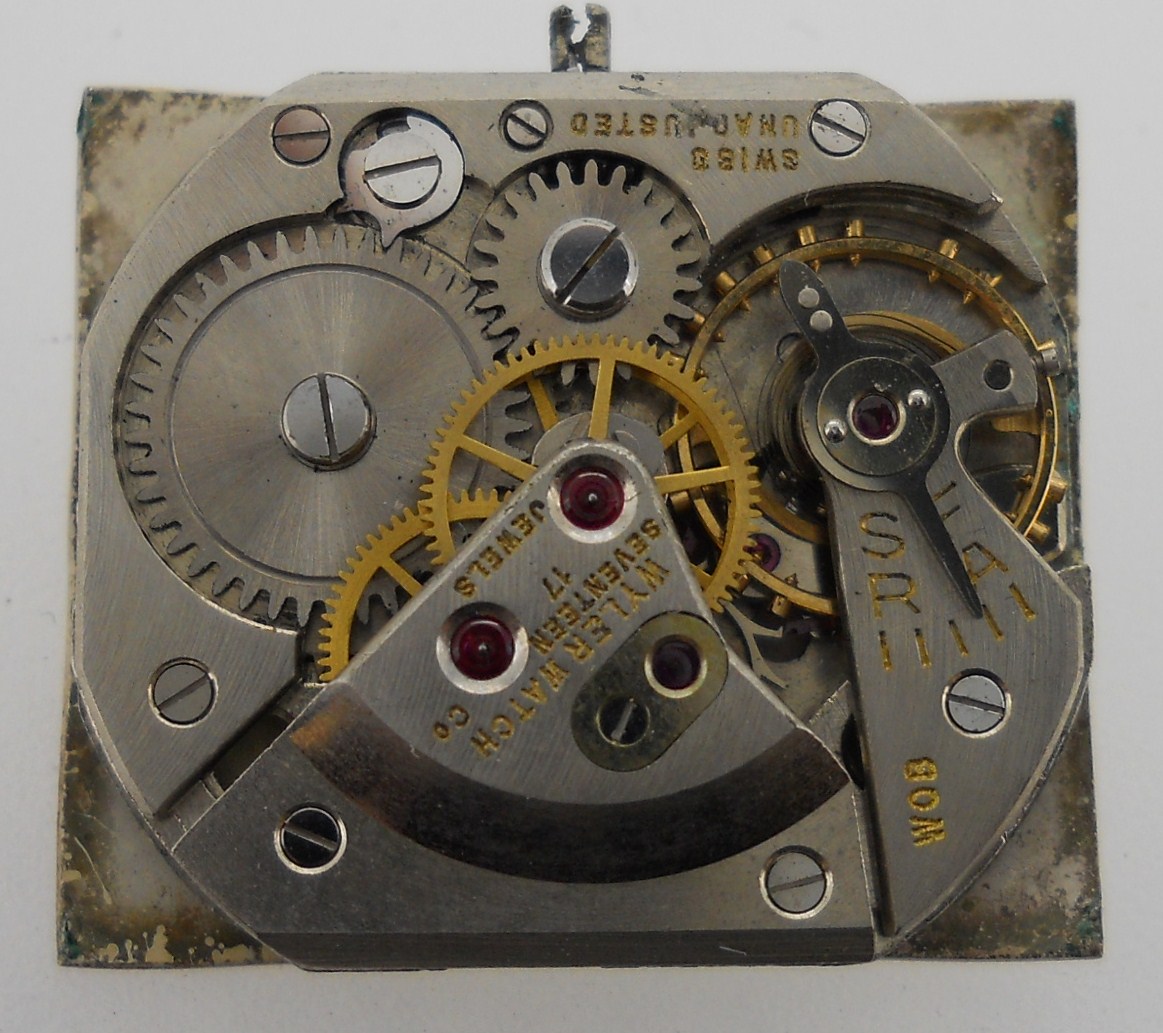
The movement is a Wyler signed ETA 1090 with the legendary (at the time) incaflex balance (more about that later). The case is one-piece (monocoque) meaning that only the crown and glass needed sealing.  It is also the first watch, that I know of, that has the “watermark” logo in the centre of the dial, in this case, a “W”
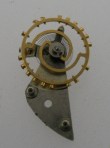
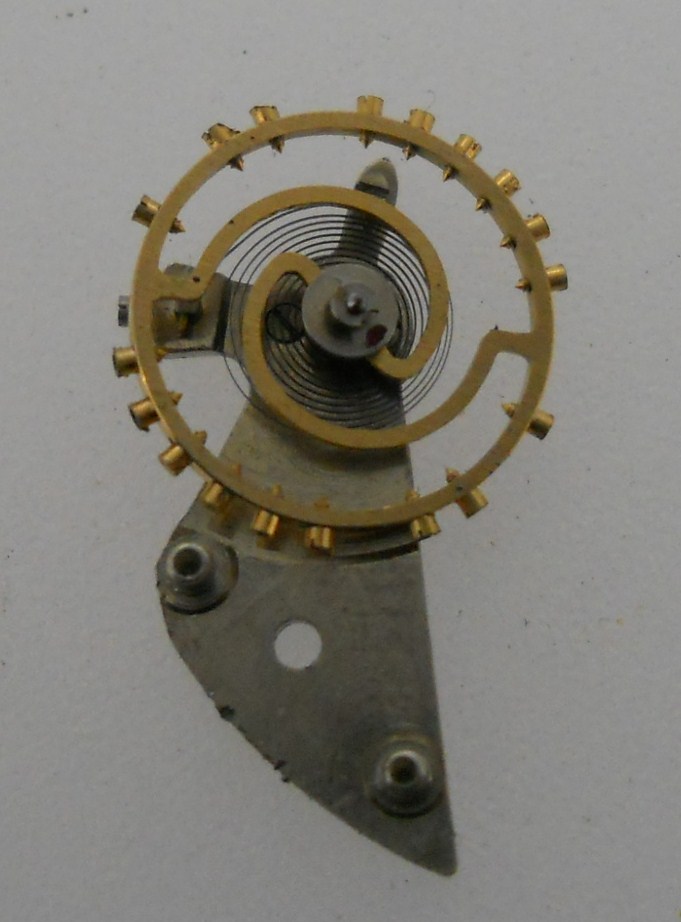
The Incaflex balance

Wyler, as a brand, appeared late in chronological history, 1923, but hit  the scene running with the incaflex, a shock proof system that would stand up to this day. It works by the balance wheel being protected along its diameter by two spiraling, elastic arms, which absorb any shocks to the balance wheel. Wyler gained worldwide notoriety with a spectacular marketing stunt in 1956, when two watches were dropped from the top of the Eiffel Tower and continued to function after the fall.

In 1937 Wyler introduced a revolutionary and effective water proof system.

So, before WW2, Wyler had successfully conquered the two main problems in practical horology.

Why then didn’t Wyler prosper and survive as a brand when brands like Heuer and Breitling who contributed little to technological advancement are today among the most desirable of  marques?

I think it’s because Wyler where ahead of their time; the public didn’t see the need for waterproofness and shockproofness in watches and, rather than a threat, other manufactures and retailers saw these advances as mere novelties that would not last.

Well, Wyler did not last, they disapeared around 1972 but now, a watch that is not water resistant or shockproof would be unmarketable.

This watch is a great piece of horological history.

Posted in Wyler | Tagged , , | Leave a comment

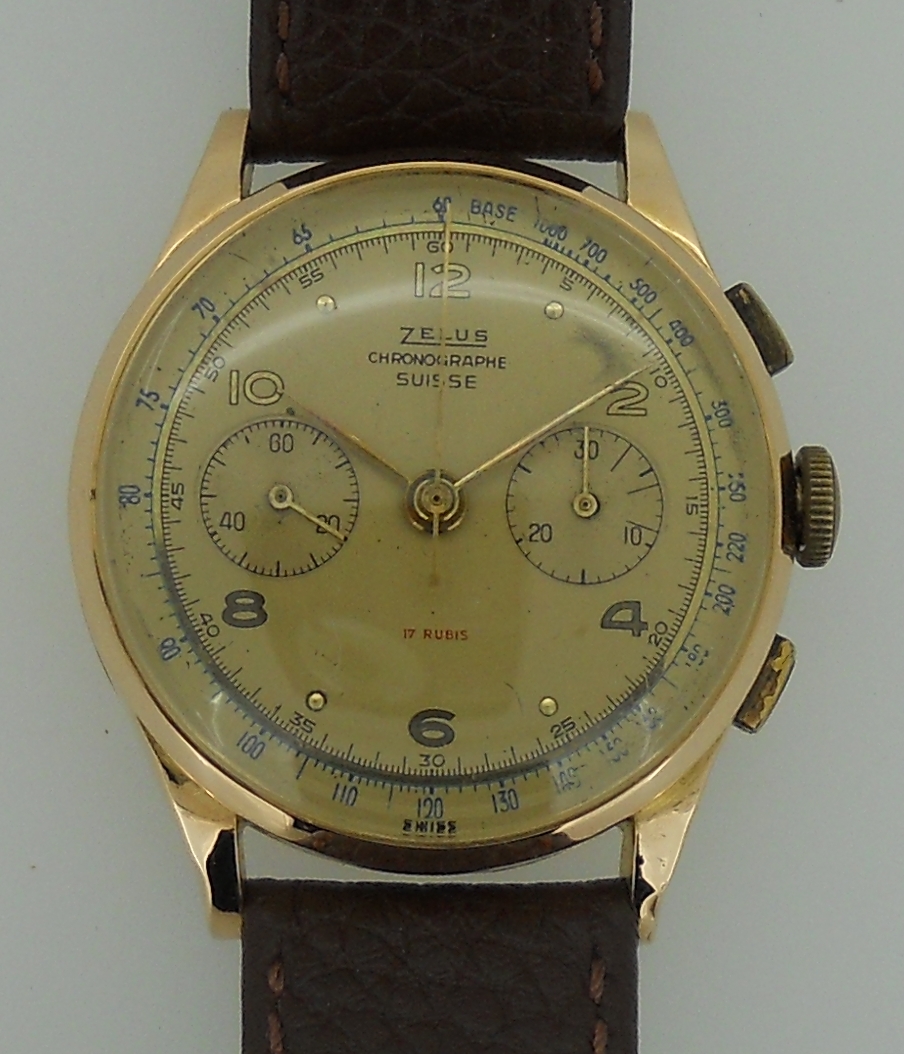
Zelus Chronograpgh 18ct gold 1950c


The Zelus is an obscure brand that I was unable to find any information on. I’m guessing that the brand is probably Italian with a Swiss movement.

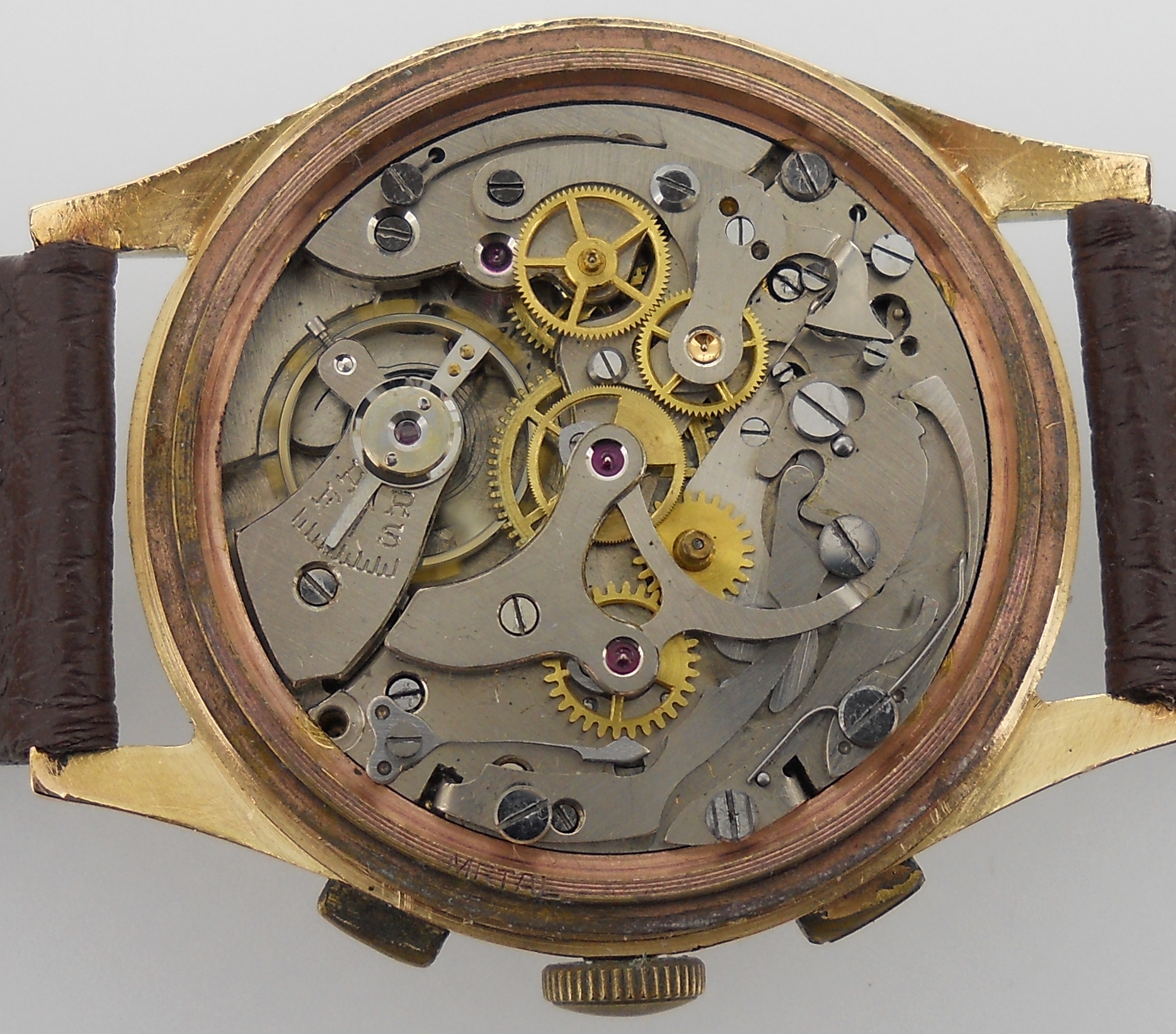
This is an 18ct gold three register chronograph with no dedicated second hand. It’s from around the late 40’s to the mid 50’s. The movement is Landeron 48 of which over 3.5million was produced from 1937 to 1970.

This type of watch was popular with young latins of the era who wanted to impress with the features of 18ct gold style and chronograph technology. He probably aspired to drive an Alfa Romeo.

To make it a bit more affordable the manufacturer was very mean with the gold; the back could be easily buckled with just finger pressure and had to be re-enforced with a brass inner back. The case was equally thin and the lugs where hollow. Needless to say it was nowhere near water or dust resistant nor was the balance shock protected.

These watches where not rare when I was an apprentice in the late 60’s but now, there seems to be few that went the distance; they didn’t travel well because of their fragility. A dealer once told me that most of these watches that came his way, he melted down.

HELP! If you have any information on the Zelus brand please let me know.


Posted in 18ct Gold, Chronograph, Zelus | Tagged , , , | Leave a comment

Cortebert Braille 1968c


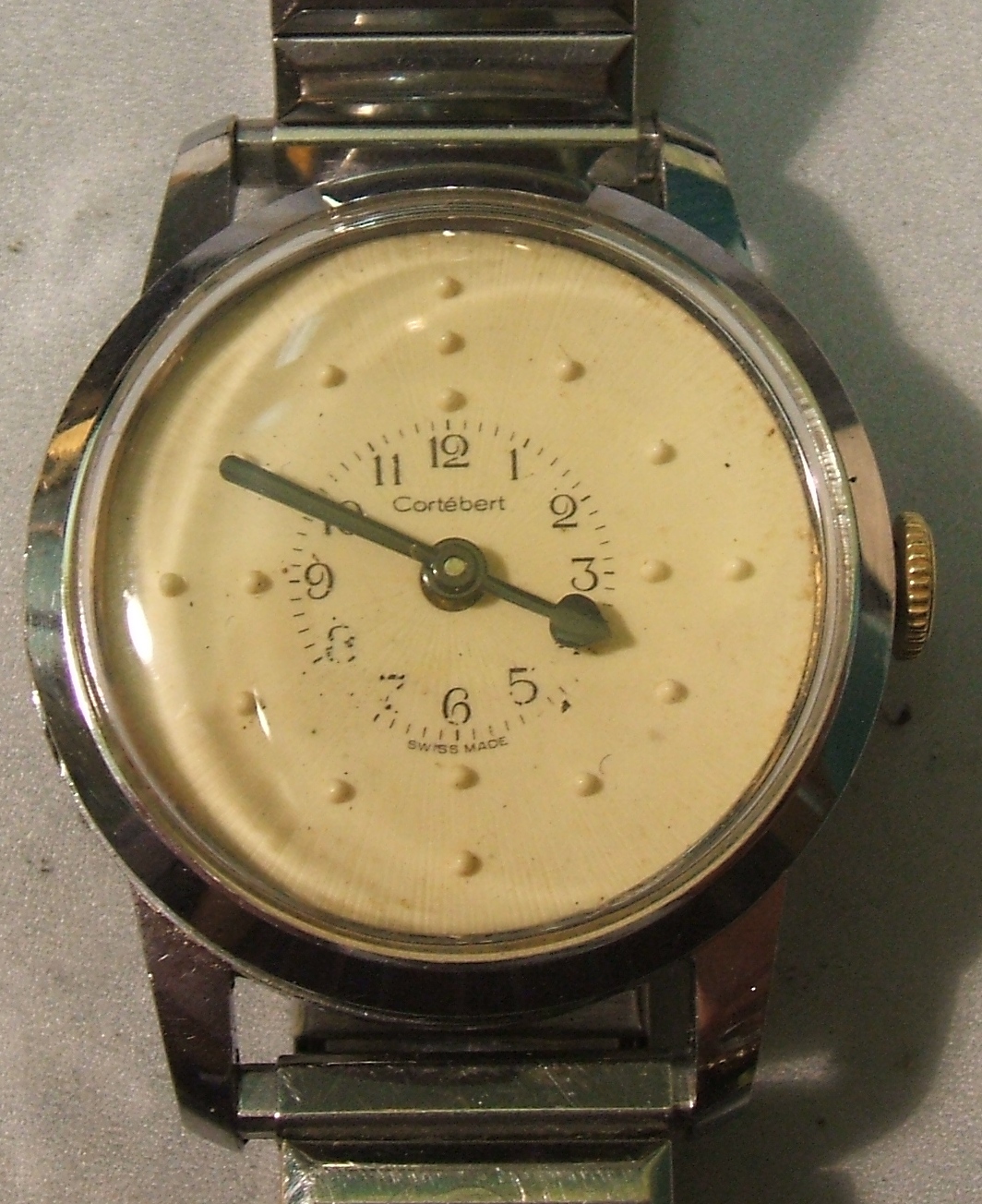
 Here I have a less glamorous specialty timepiece; a braille watch.

The braille watch is unique in that the wearer tells the time by feeling the position of the hands.  This means that the hands must be very sturdy and anti corrosive, the dial must be able to resist constant touching and have raised braille markers instead of index batons. Aso the movement must be tough enough as to not be effected by pressure being put on the hands. 

Pressing the crown further than the rest position lets the bezel and glass spring open, accesses the dial. 

All of these special requirements need to of good quality; imagine how many times a wearer would flip the lid to feel the time in the course of a day.

This watch is hard to date because with these watches styles did not change for decades but a few little things indicate to me that it’s from the late 60’s.

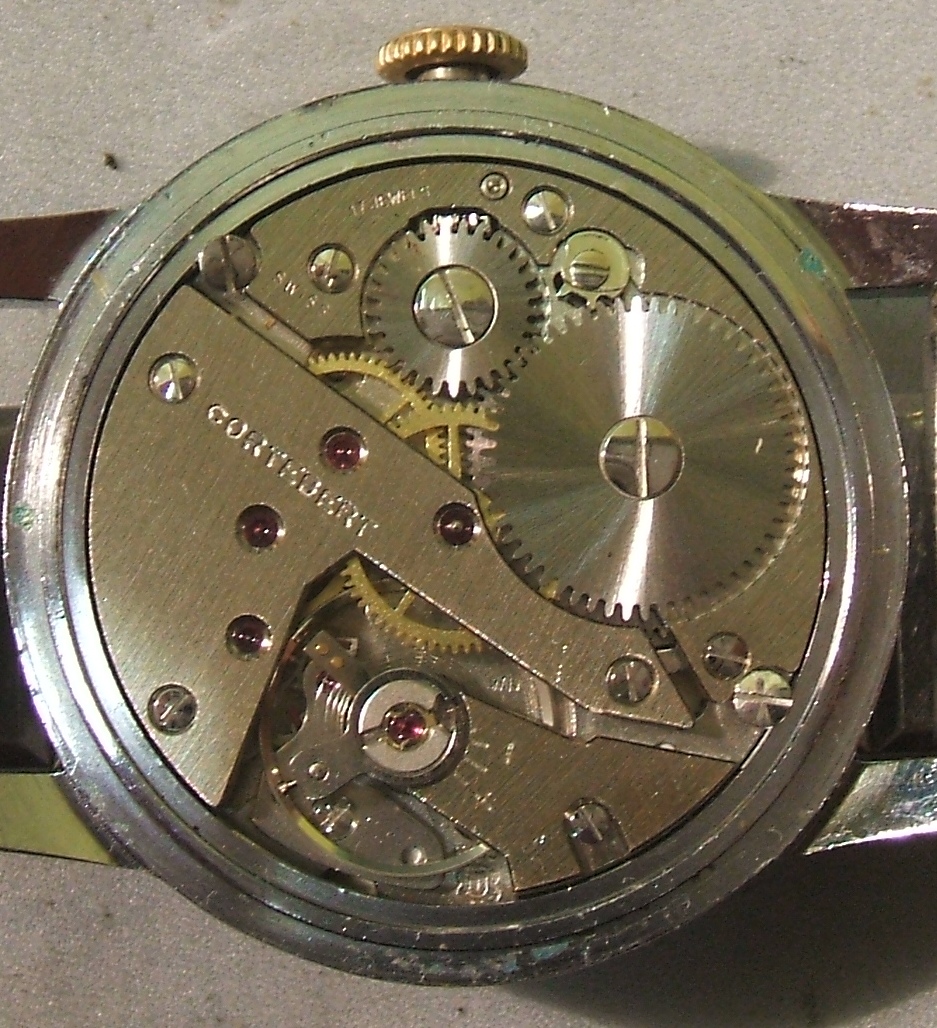
This watch uses a Unitas 6325, so called Wehrmachtswerk (army movement), remember I said it needed to be rugged. 

Cortebert is a typical Swiss brand that started in the 1800’s (1855 as Cortebert but was founded in1790), has a good pedigree in producing high-grade, mostly pocket watches, went to Ebauche movements in the 1960’s before disappearing in the late 1970’s. 

Most famous for developing the first jump hour (digital) watch in the 1920’s and being the official supplier of railroad watches to the Turkish and Italian railways in the first half of the 20th century. 

I needed a Cortebert and a braille watch in my collection; here I have both! But I can still use a nice railway pocket watch from the 30’s, preferably a Turkish one.

Posted in Braille Watch, Cortebert | Tagged , , , | Leave a comment