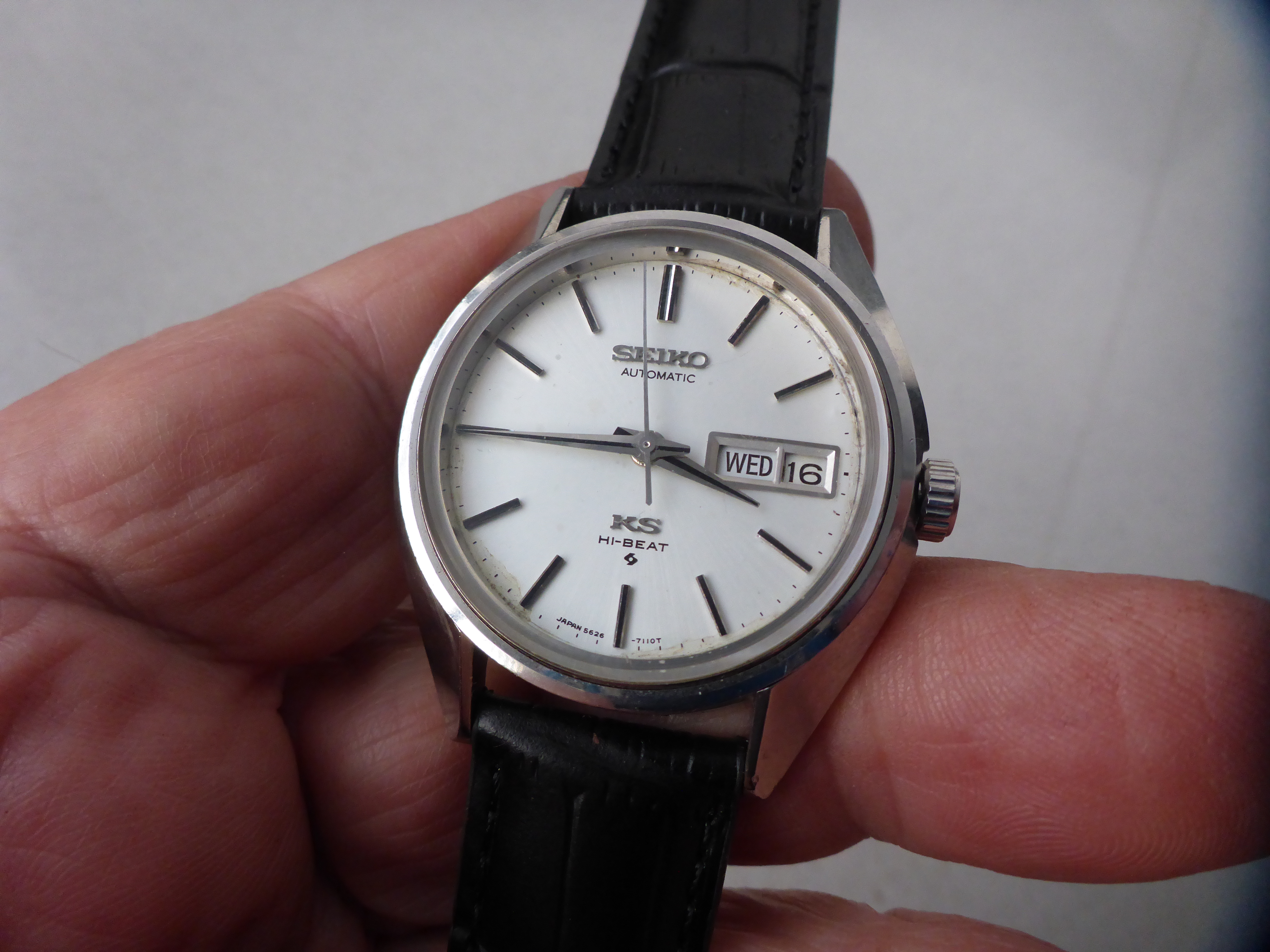
The “KS” stands for King Seiko which was second only to the GS or Grand Seiko at the top of the line Seiko of the 60’s and 70’s. It is a quality, conservitive in style, high tech, all rounder, aimed at the professional who could wear it anywere from the office or formal function, to the boat and on the tennis court. Don’t forget that we are in an era when hardly anyone had more than one watch.
Among its many features is a monocoque case (no case back) meaning only the crown and the glass are possible entry points for moisture. Another is a hardlex crystal, many times harder than perspex which was the standard at the time.
The movement is the 5626, the high beat version of the 5606 which was Seiko’s basic flagship movement from 1968 to the late 70s. It is very sophisticated and refined. At 4.45 mm thick, it was the thinnest automatic movement available when it was introduced. It is potentially very accurate because of its high beat rate (beating at 28,800 beats per hour) whereas the 5606 and just about all other movements were ticking away at 21,600 beats per hour. It also has auxiliary hand winding and hacking.
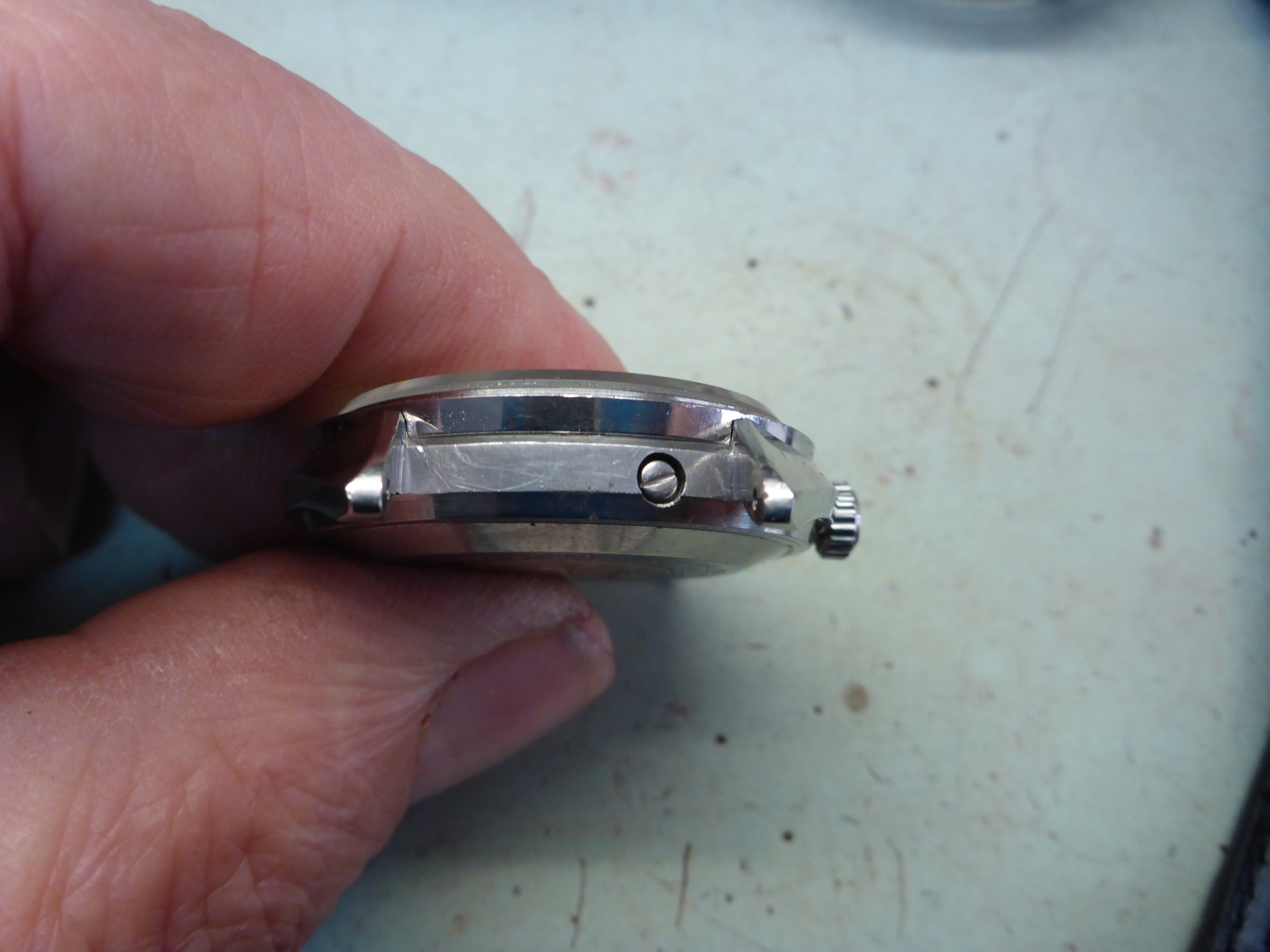
But this watch has a feature that I have never come across previously, the ability to calibrate the timing without opening the watch. And, being a one piece case, getting to the movement requires more than just the appropriate tools; it also requires know how and the skill of an experienced watchmaker. So, the owner can calibrate the watch themselves by removing the screw plug situated between the lugs at six. Inside, there is another screw which can be turned, very slightly, to adjust the timing of the watch.
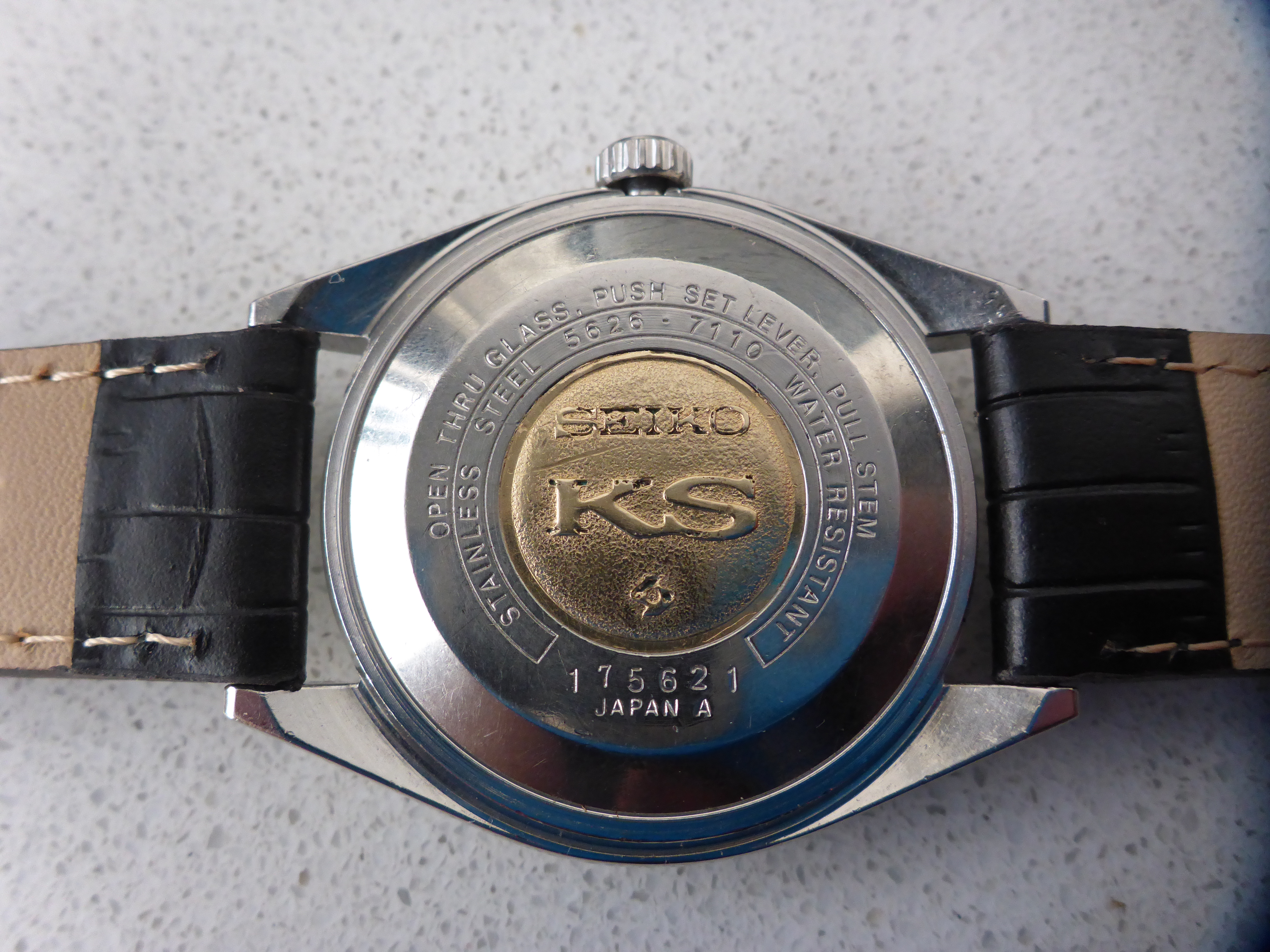
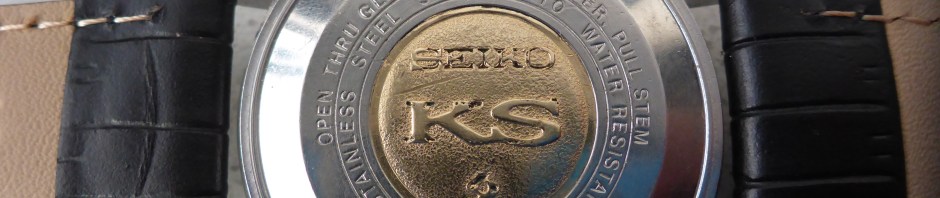
It’s not a very distinctive watch. Aesthetically, there’s really not a lot separating it from lesser models like the Lord Matic. But it does have a certain simplistic quality look to it. When turned over it’s a different story, the gold “KS” medallion is impressive and leaves us in no doubt that this is a special timepiece. Oh! I almost forgot. Seiko have at last signed the crown “KS”

 robswatches